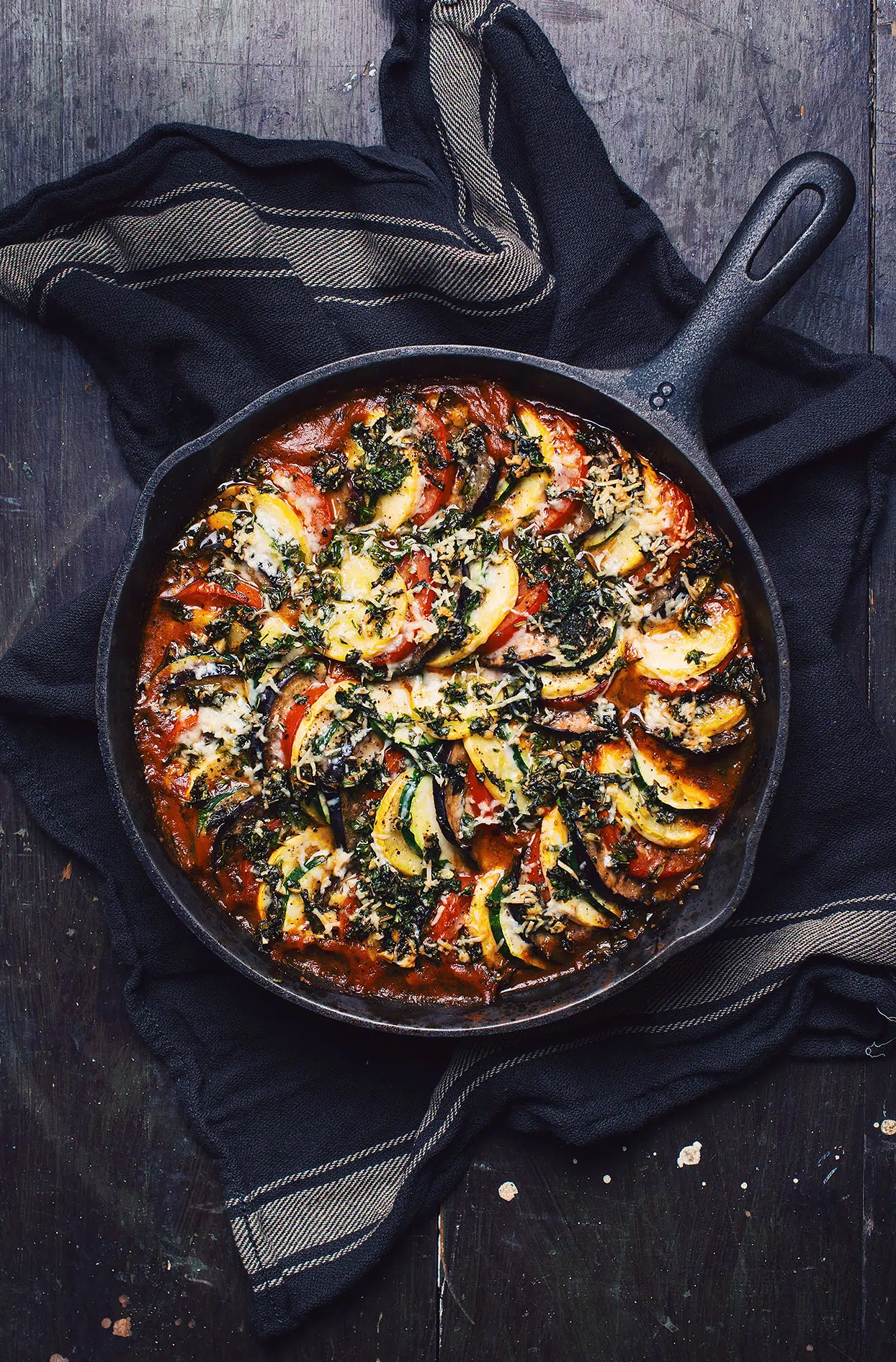
Ratatouille is vegetables melted for a long time in olive oil. The eggplant drinks the fat, the pepper sweetens, the tomato concentrates. Soft, round, a little heavy, and nothing lively to wake up the mouth.
It's liveliness you want in the glass. Serve a saison: dry, with its bubbles and its yeast pepper, it wakes things up like the thyme and the ground pepper in the pot. Its short finish resets the mouth between bites of olive oil. Red ale comes second. For wine, a Provence rosé, or a Vermentino.
The cooking changes the dish: classic stewed vegetables, grilled vegetables instead of stewed, or served as a side to a meat. The page has a beer and wine pairing for each, and our ratatouille recipe is below.
This dry saison, with lively bubbles and a pepper that comes from the yeast, does in the glass what thyme and ground pepper do in the pot: it wakes things up. It resets your mouth between bites of olive oil, which a round beer doesn't do. Great for an August dinner, when the garden is overflowing with vegetables!
The red ale is malty, with a caramel that follows the melted vegetables, whereas the saison is dry and peppery. Go for it if the ratatouille has simmered for a long time, or if you want a softer beer.
This dry Provence rosé, with notes of strawberry, melon and sometimes white peach, is clean and fresh. Ratatouille is soft, round and oily: it lacks a bit of liveliness, and the rosé gives it that. Over there, tomato, pepper and olive oil have always been eaten with it. Serve it well chilled!
The vermentino smells like lemon, grass and a salty edge. It's livelier and drier, with no red fruit. Pick it if your ratatouille is served with fish or goat cheese, or lukewarm in summer.
Red sangria is red wine, fruit and brandy, fruity and generous. Classic ratatouille of stewed vegetables is sweet, round, rich in olive oil and a little heavy: the acidity of the sangria's fruit wakes up that heavy side and the fruitiness goes with the vegetables. Best shared in the sun. The drink suits the vegetables without crushing them.
Or an Aperol spritz, light and bubbly, orange-bitter. Choose it when the heat is strong, so the ratatouille doesn't weigh you down. For a light supper.
Alcohol-free
An alcohol-free amber ale
Cooked tomato is acidic and the sauce is full of flavour. Its caramel and hazelnut side suits roasted meats, brown sauces and grilled vegetables.
Grilled rather than simmered, the vegetables keep their bright taste and less oil. This saison, with peppery yeast, citrus hops and a clean dryness, meets their charred side with its pepper, and its lively bubbles clean the olive oil so each vegetable tastes on its own.
The blonde ale is soft and lightly malty, without the pepper of the saison. It lets the grilled vegetables speak. Go for it if your ratatouille is mild and not very spicy, or if the saison feels too dry.
This Provence rosé, with notes of white peach, strawberry and grapefruit zest, finishes dry and nice and fresh. Next to grilled vegetables, which keep a bright taste and little oil, it hides nothing. Its freshness follows the tomato's, and its herbal notes meet the ones that go in the dish.
The vermentino smells like lemon, green almond and a hint of salt, with a lively freshness. Pick it if you want a white instead of a rosé: it follows the grilled vegetables without weighing them down, especially if the dish is served lukewarm or cold.
With a grilled ratatouille, vegetables instead of stewed, less oily and livelier, white sangria, white wine, peaches and citrus, fresh and light, keeps the same momentum and does not weigh it down.
Our recipe → · Alcohol-free version: White grape juice, peach and sparkling water, diced fruitPeaches and white grape juice make a fruity, light sangria without the wine.
Served with meat, ratatouille takes advantage of its richness. This amber ale, with notes of caramel and toast, has discreet hops and a soft bitterness. Its caramel meets the cooked vegetables and the roast meat, and its bitterness cleans the fat of the juices, so the vegetables don't get lost behind the meat.
The saison is dry and peppery: it lifts the vegetables and the meat without rounding them out, the way the amber ale does. Go for it if your meat is fatty, or if the amber ale feels too sweet with the tomato.
This Rhône grenache, with notes of cooked strawberry, pepper and garrigue, is a supple red with warm fruit. Next to vegetables simmered in olive oil, it meets their sweetness. Next to the meat, its ripe fruit runs through the fat of the juices without standing up to it, and the two go down together. It bridges the vegetables and the meat.
The syrah has more black pepper and firmness. Pick it if the meat is a really fatty lamb or beef roast, because it dries out your mouth more and cleans the fat better where the grenache just gets through it.
Served with a meat that brings its own fat, ratatouille goes with red sangria, red wine, fruit and brandy, fruity and generous: its fruit meets the tomato, and its body stands up to the meat.
Our recipe → · Alcohol-free version: Red grape juice, orange and apple, topped with sparkling water, diced fruitThe soaked fruit is half of a sangria: the red grape juice takes the wine's place.
Under the cheese crust, the ratatouille vegetables are slow-cooked and the richness of the cheese melts into them. Saison has fine bubbles, pepper and citrus, and a dry finish. Its bubbles cut the richness of the cheese, and its citrus joins the tomato without crushing the vegetables.
Amber ale has a caramel and toasted bread malt, rounder than the saison. Take it if you like the crust well browned, because its toasty malt picks up that taste. It also suits those who find the saison too dry.
Provence rosé smells of strawberry, grapefruit and white peach, dry and fresh. It knows the vegetables of the South well, and its acidity answers that of the tomato. Its freshness cuts the richness of the browned cheese, and since it doesn't dry the mouth, the slow-cooked vegetables stay sweet. Served chilled, it lightens the crust.
Rhône Grenache smells of ripe strawberry and cherry, with a hint of pepper and a supple body. Take it if you want a red: its fruit goes with the slow-cooked vegetables and it stays mild enough for the cheese.
White sangria, white wine, peaches and citrus, fresh and light, lightens a ratatouille browned with cheese: its acidity cuts the cheese fat, and its fruit meets the candied vegetables under the golden crust.
Our recipe → · Alcohol-free version: White grape juice, peach and sparkling water, diced fruitPeaches and white grape juice make a fruity, light sangria without the wine.
Served over pasta or polenta, the ratatouille has a sweet tomato on a base that fills you up. Saison has fine bubbles, pepper and citrus, and a dry finish. Its dry finish cuts through the sweetness of the tomato, and its bubbles refresh the mouth between forkfuls.
Amber ale has a caramel and toasted bread malt, rounder. Take it if you serve the ratatouille over polenta, because its toasty malt follows the corn and the sweetness of the tomato.
Tuscan Sangiovese smells of cherry and dried herbs, with a bright acidity. Sweet tomato, pasta or polenta: it's an Italian setting, and this red is at home in it. Its acidity answers the tomato and its tannin, which dries the mouth a little, settles down with the starch. A little chilled, it keeps the pasta light.
Provence rosé smells of strawberry, grapefruit and white peach, dry and fresh. Take it if you want to stay light: it follows the tomato and the vegetables, and doesn't weigh on the pasta.
Served over pasta or polenta, ratatouille, sweet tomato on a starchy base, likes the Aperol spritz, prosecco and bitter orange, light and fizzy: its bubbles refresh the starch and its bitter orange follows the tomato.
Our recipe → · Alcohol-free version: Sparkling water, pink grapefruit and orange juice, orange sliceThe grapefruit brings the Aperol's light bitterness, the orange brings the sweetness, and the bubbles make the spritz.
In a tian, the vegetables are roasted in slices with herbs, almost without sauce, so their sweet taste comes through. Saison has fine bubbles, pepper and citrus, and a dry finish. Its pepper and its citrus marry with the herbs, and its bubbles refresh roasted vegetables.
Blonde ale is softer, with a light malt that tastes of bread and honey. Take it if you prefer a calm beer, because it leaves the herbs and the roasted taste of the vegetables in peace.
Provence rosé smells of strawberry, grapefruit and white peach, dry and fresh. Roasted vegetables with herbs come from the same country, and this wine goes with them almost by instinct. With so little sauce, the wine plays that role: its acidity wakes up the vegetables and its freshness picks up the herbs.
Sardinian Vermentino smells of lemon, wild herbs and almond, with a touch of salt. Take it if you want a white: its herbs join those of the tian and its salt lifts the roasted vegetables.
A ratatouille in a tian, sliced roasted vegetables, with its herbs and little sauce, finds in white sangria, white wine, peaches and citrus, fresh and light, a glass that respects the roast without covering it.
Our recipe → · Alcohol-free version: White grape juice, peach and sparkling water, diced fruitPeaches and white grape juice make a fruity, light sangria without the wine.
Its spicy, fruity, slightly lemony notes with a dry finish complement the herbes de Provence and the richness of the olive oil without dominating. Its Champagne-like side and fine fizz clean the palate between bites of confit vegetables. A French saison with a French dish. The obvious choice.
Ratatouille, with its zucchini, eggplant, tomatoes and grilled peppers, is a dish of the sun. The Mirabeau Classique, a Provence rosé made from Cinsault, Grenache and Syrah, is right at home with it. Its freshness goes with the tomato, its fruit with the peppers, and the fresh herbs complete the picture.