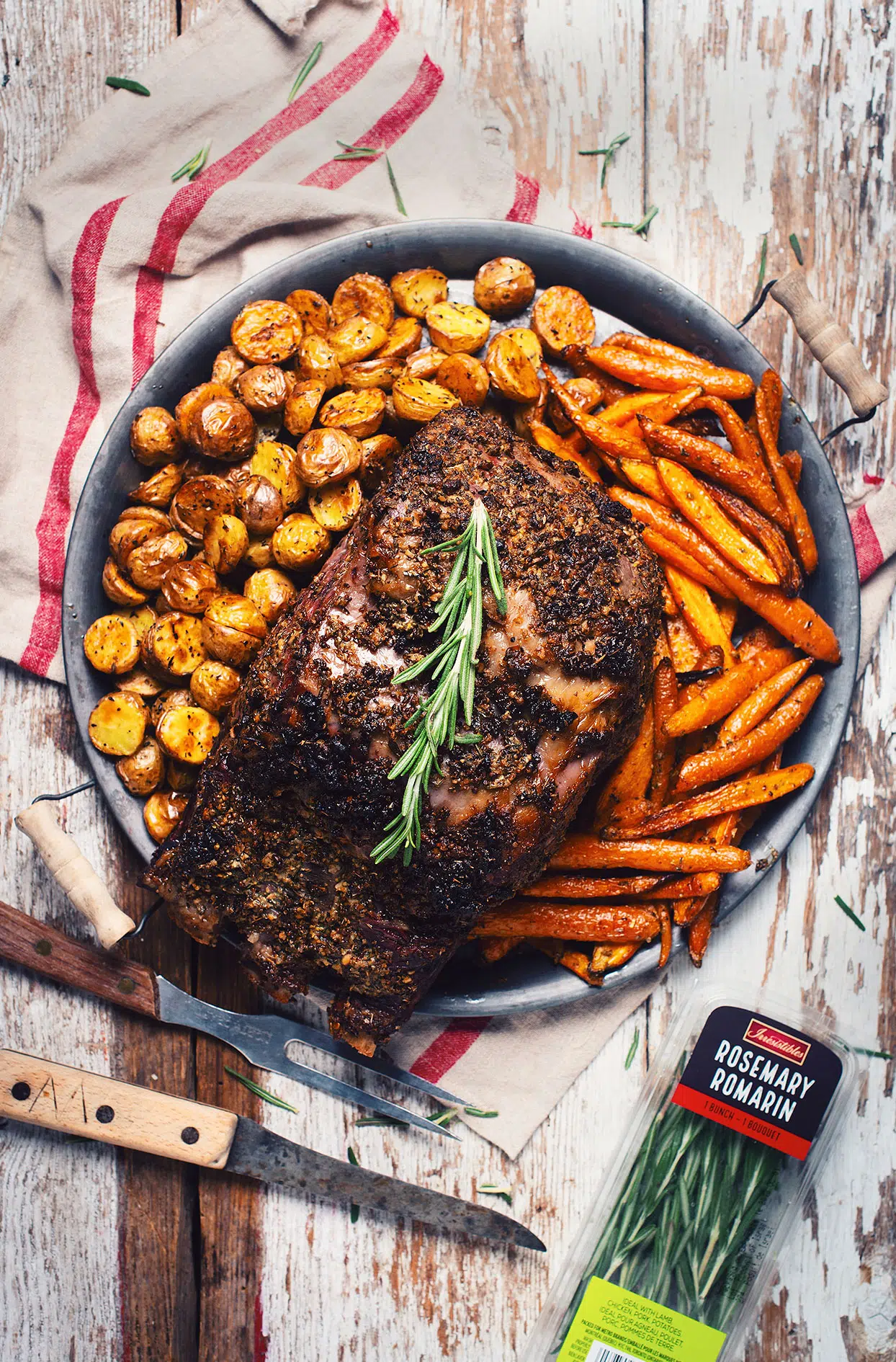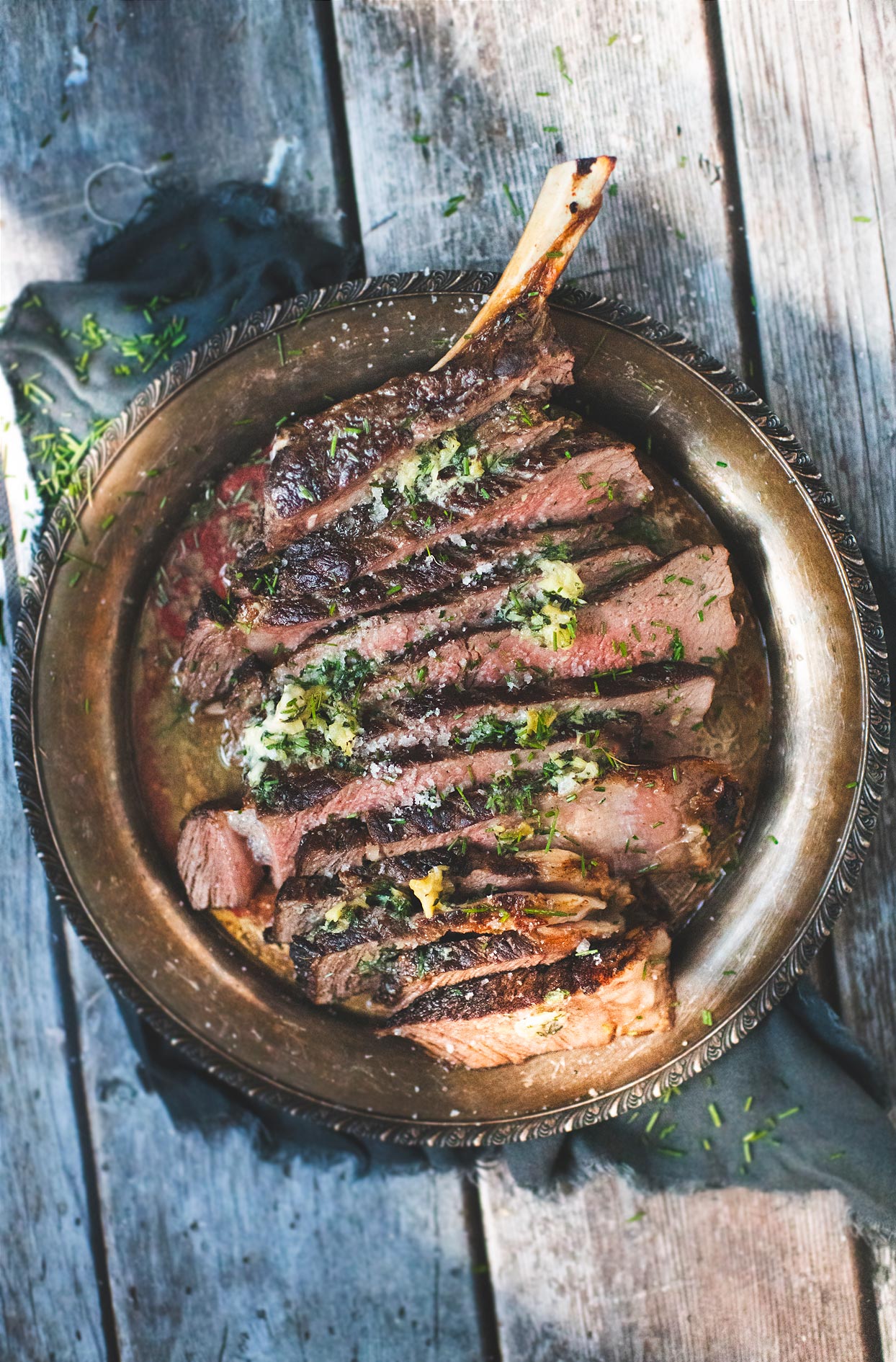
A big pink roast with marbled fat, its salty crust and its juices. Every bite is rich and deep, and the fat builds up fast: you need a drink with some body that does not flatten the meat.
Amber ale has the caramel malt that follows the crust and the bitterness that cleans the fat; red ale, drier, replaces it without losing the thread. In the glass, a Cabernet Sauvignon, whose firm tannins dry the mouth and cut through the fat of the beef, or a Syrah.
The roast can come under a garlic and herb crust, from the smoker, in a pepper sauce or in a hot sandwich. The fat, the sauce and the fire change the drink. So each kind has its own beer and wine pairing, below.
The basic pairing
Pink prime rib
Pink prime rib, served with its cooking juices and a little fresh horseradish.
A pink prime rib has marbled fat, a salty crust and its juices. This amber ale has a caramel and toasted bread malt, with just enough bitterness to clean the fat. That malt meets the crust of the roast, and the beer refreshes the mouth between slices. The beef keeps the spotlight.
Red ale is drier than amber ale, with a bread crust flavour and a sharper bitterness. Reach for it if your roast is well salted, or if you like the horseradish to stand out a bit more.
This Cabernet Sauvignon from Bordeaux smells of blackcurrant and cedar, with firm tannins that dry the mouth. Against pink beef with marbled fat, that effect is exactly what you want. The fat of the meat softens the wine, and the wine cleans the mouth. The juices and the salty crust find a match worthy of them.
Syrah from the Rhône Valley is more peppery and fruitier, with blackberry and smoked meat flavours. It fits better if your roast has a well peppered crust, or if you prefer a red that is a little less severe.
The Manhattan is whisky and red vermouth, silky and warm, with a cherry at the bottom of the glass. It stands up to a medium-rare prime rib, its marbled fat and salty crust, without flattening the jus. Take your time with it, at the table, before the horseradish. The roast won't mind.
Otherwise, an old fashioned: whisky, sugar and bitters, drier and more direct, which sits well with the salty crust on the roast and its jus. Pick it if you like things less sweet.
This crust mixes roasted garlic, fresh herbs and the melting fat of the rib. Red ale has a toasted malt, a little caramel and a dry bitterness that cuts this fat. The herbs keep their aroma, because the beer does not sweeten the crust. The milder roasted garlic finds its roundness there.
Amber ale is rounder and softer than red ale, with a caramel malt. It fits better if your garlic is roasted very long, until it turns sweet, or if you serve the meat well done.
Cabernet Sauvignon from Bordeaux smells of blackcurrant and a little green pepper, a grassy note that answers that of the crust. Its firmness, which dries the mouth, cuts through the melting fat of the roast. The rosemary and thyme of the crust find an echo in the wine, and the roasted garlic melts into it quietly.
Cabernet Franc from the Loire is lighter, with raspberry and a leafy, fresh herb side. It comes out ahead if your herbs are the stars of the crust, or if you prefer a less hefty red.
The Negroni is plainly bitter, with gin, red vermouth and orange underneath. With a prime rib in an herb and garlic crust, it freshens up the melting fat and lets the roasted garlic and fresh herbs stay up front. A glass that wakes you up.
A smoked or BBQ roast gets a black, peppery crust and a fat that melts over time. Porter has a roasted malt, with coffee and dark chocolate, that meets the smoke. Its fine fizz cuts the fat of the meat and lets the pepper warm up gently. It follows the wood fire all the way.
Brown ale is softer than porter, with caramel and hazelnut, and little roastiness. It fits better if your smoke is light, or if the crust is very peppery and you want a beer that soothes.
Syrah from the Rhône Valley smells of blackberry, black pepper and smoked meat, with a hefty body. Against a smoked roast with a peppery crust, those notes find each other with no effort: the wine seems to come from the same embers. Its tannins dry the mouth and cut through the melting fat of the meat.
Malbec from Mendoza is rounder and darker, with black plum and a touch of cocoa. Reach for it if your BBQ sauce is sweet, or if you like a softer red under the smoke.
An old fashioned is whisky, sugar and bitters, slow and woody. It picks up the smoke of a slow-cooked BBQ prime rib, and its touch of sugar holds its own against the peppery crust and the melting fat. A fireside kind of glass.
Alcohol-free version: Smoky black tea, maple syrup and orange peel over one big ice cubeAn old fashioned is oak, a little sugar and orange: smoky tea and maple do the same.
The red wine or pepper sauce is rich, glossy and very bold, and it adds to the fat of the rib. Brown ale has a roasted malt, with hazelnut and toasted bread, that matches the depth of the sauce. Its sweetness stands up to the pepper, and its round body keeps the mouth from tiring.
Red ale is drier and livelier than brown ale, with a clean bitterness. It comes out ahead if your pepper sauce is very creamy, or if you want the beer to cut rather than coat.
Cabernet Sauvignon from Bordeaux smells of blackcurrant and cedar, and it has firm tannins that dry the mouth. In a red wine sauce, that blackcurrant finds the fruit of the cooking wine, and the pepper melts into its firmness. The fat of the rib and that of the sauce round it all out.
Syrah from the Rhône Valley is spicier and more peppery than Cabernet, with very ripe blackberry. It fits better if your pepper sauce is hot on the palate, because the wine makes it a duet rather than a duel.
The Manhattan is whisky and red vermouth, silky, with a cherry underneath. It matches a rich red wine sauce, and the pepper stands out nicely against its warm, slightly sweet base. It ties the glass to the plate.
Alcohol-free version: Tart cherry juice and cold black tea, a cherry at the bottomThe cherry and the black tea recall the red vermouth and the whisky, with the same deep base.
Bread, thinly sliced beef and salty juices: it is a counter meal, simple and filling. This amber ale has a caramel and toasted bread malt that hugs the crumb soaked in juices. Its low bitterness cleans the mouth without clashing with the salt. You can drink the beer through the whole sandwich without getting tired of it.
Red ale is drier, with a crust malt and a touch of bitterness. Try it if your juices are very salty, or if you add melted cheese and onions to the bread.
Merlot from Bordeaux smells of plum and black cherry, and it is round, with a supple texture that hardly dries the mouth. Against a hot sandwich, it does not fight with the bread and follows the salty juices of the beef. A hefty red would be too much for thinly sliced meat, while this one makes a meal with no harshness.
Gamay from Beaujolais is light and fresh, with strawberry and cherry, and it hardly dries the mouth. It comes out ahead if your sandwich is topped with cheese or onions, or if you serve it casually, with a lightly chilled wine.
An old fashioned is whisky, sugar and bitters, straight up. With a hot sandwich of sliced beef, it keeps a cool head against the salty jus and the soaked bread. A simple glass for a sandwich that is just as plain.
Alcohol-free version: Smoky black tea, maple syrup and orange peel over one big ice cubeAn old fashioned is oak, a little sugar and orange: smoky tea and maple do the same.
A cut of beef this size needs a beer with some body. An extra special bitter comes generously malty, with caramel and biscuit notes, and a firm but polished bitterness that cuts through the garlic butter. It stands up to the roast without ever stealing the spotlight.
A reserve sangiovese from the oldest estate in Chianti, with notes of black cherry, leather and dried herbs that speak directly to the thyme and rosemary in the butter. Its Tuscan acidity cuts through the fat of the meat without ever overpowering it, making it an ideal companion for my oven-roasted beef rib steak with roasted garlic butter.
Thyme and rosemary crusted on a ribeye, you smell it well before the first slice. The slightly herbal side of this malty beer grabs onto it, while its caramel and toasty notes take care of the meat. Leftover sugar and a light bitterness, that's all it takes.
Ah, Bordeaux. Have I mentioned how happy these wines make me? Here is another of those small treasures, a cru bourgeois supérieur from the Haut-Médoc, cabernet sauvignon and merlot. The first aromas are leather, cedar and raspberry. The palate is ripe, the tannins are supple, and the finish, my friends, goes on and on.