

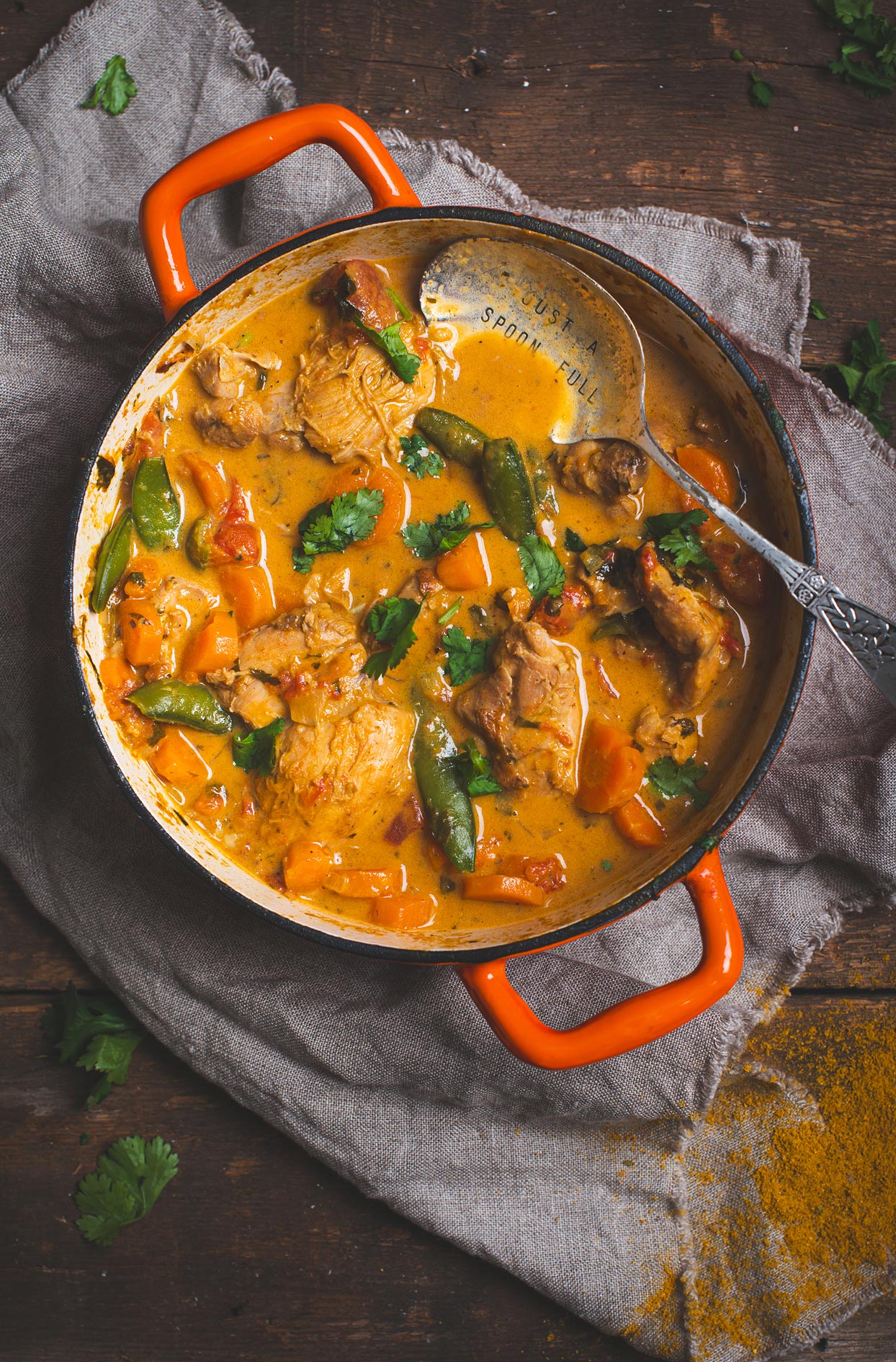
Chicken curry
- Preparation 25 min
- Cooking 40 min
- Servings 4
- Freezing Absolutely
Ads
🔥 A comforting curry that takes you on a trip
Some dishes warm the head as much as the belly, and this chicken curry with coconut milk is clearly one of them. An old recipe from my site I love making over and over: fragrant sauce, just creamy enough thanks to the light coconut milk, well-balanced spices, and boneless chicken thighs that melt into the sauce slowly… it’s the kind of recipe that fills the kitchen with smell and announces a solid dinner.
🍗 Why boneless thighs + light coconut milk
My signature combo: boneless skinless chicken thighs (fatty, juicy, delicious. Way tastier than breast that dries out in the sauce) and light coconut milk (intentionally! much less fatty than regular, and honestly just as good in the mouth). With crunchy snap peas added at the end, you get the perfect equation: creamy + tender + crunchy. This trio is what makes all the difference vs other classic curries.
🍽️ The kind of dish that brings people together
Served over good basmati rice piping hot, with naan bread to mop up every last drop, this chicken curry checks all the boxes. Simmered at a strong boil for 20 minutes to reduce and concentrate the flavors, it’s perfect for a cozy weeknight dinner or to entertain without stress. A Quebec recipe we come back to season after season.
Ads

Ads
🔥 Brown the chicken well at the start
Browning the chicken is essential to develop deeper flavors and beautiful aromatic complexity. Avoid overcrowding the pot: too many pieces at once will release water from the chicken, leading to a boiled rather than seared texture. Better to work in two batches if needed to get well-browned, flavorful, perfectly textured meat. This browning creates the foundation of the whole sauce.
🍗 Boneless thighs > breast (always)
My absolute choice for this curry: boneless skinless chicken thighs. More fat = more flavor, they stay juicy even after 25 minutes of simmering, unlike breast which dries out. If you only have breast, cut into large cubes and add it just 10 minutes before the end to prevent drying. Whole bone-in thighs also work (add 15 minutes of cooking).
🥥 Why LIGHT coconut milk
My deliberate choice: light coconut milk over regular. Less fat, less heavy, and honestly the sauce stays just as creamy and flavorful — the reduction concentrates the flavors without weighing it down. If you use regular, that’s OK too, just reduce a bit longer to thicken. Avoid « coconut cream » (too sweet) and « coconut drink » (too thin). A 400 ml can of light coconut milk does the whole job.
🌿 Good curry powder makes ALL the difference
Where many people go wrong: the quality of the curry powder. Cheap supermarket curry often tastes flat, earthy, almost bitter. Buy quality curry: specialty grocers (Anatol, Akhavan), fine food shops, or trusted brands. The fresher your spices, the more vibrant and complex your curry will be. The same dish with a low-end curry vs a quality curry = two completely different worlds.
🍚 The perfect basmati rice every time
A good curry deserves a good basmati rice. Not any basmati — go for extra-long Indian or Pakistani basmati of quality (Tilda, Daawat). Rinse in cold water until the water runs clear (removes starch), then cook in a ratio of 1 cup rice to 1½ cups water, 12 minutes on low heat covered, and let rest 5 minutes off the heat without lifting the lid. Separated, fragrant, perfect grains.
🌶️ Adjust the spice level to your taste
This curry is mild and balanced by default, to please the whole family. For more heat: add a pinch of cayenne pepper with the spices, or 1 teaspoon of red Thai curry paste for an Asian twist. To make it even more complex: add 1 teaspoon of garam masala at the end of cooking. Taste before serving and adjust salt — the most forgotten step.
🫛 Snap peas at the end for crunch
Snap peas add a touch of freshness and crunch that contrasts beautifully with the creamy sauce. Add them only in the last 5 minutes of cooking so they stay bright green and crunchy. If you don’t have them, snow peas, asparagus pieces or even baby spinach work. The idea is to have a green vegetable that brings texture without going limp.


Ads
Ingredients
- Olive oil
- 1 kg (2 lb) boneless, skinless chicken thighs
- 1 Spanish onion, finely chopped
- 4 garlic cloves, finely chopped
- 4 carrots, peeled and cut into thick rounds
- 1/2 tsp (2,5 ml) dried parsley
- 1 can 400 ml (14 oz) light coconut milk
- 1 can 540 ml (19 oz) diced tomatoes
- 1/2 cup (125 ml) fresh cilantro, chopped, plus extra for garnish
- 1/2 cup (125 ml) chicken broth
- 1 1/2 tbsp (22,5 ml) curry powder
- 1 tbsp (15 ml) freshly grated ginger
- 1/2 tsp (2,5 ml) ground paprika
- 200 g (7 oz) sugar snap peas, trimmed
- Salt and freshly ground pepper
Ads
Preparation
- In a large pot over medium heat, drizzle in olive oil and brown the chicken for 6 to 7 minutes. Season with salt and pepper. Transfer the chicken to a plate and set aside.
- In the same pot, still over medium heat, add the onion, garlic, carrots, dried parsley, and a small drizzle of olive oil. Cook, stirring regularly, for 4 to 5 minutes until lightly golden.
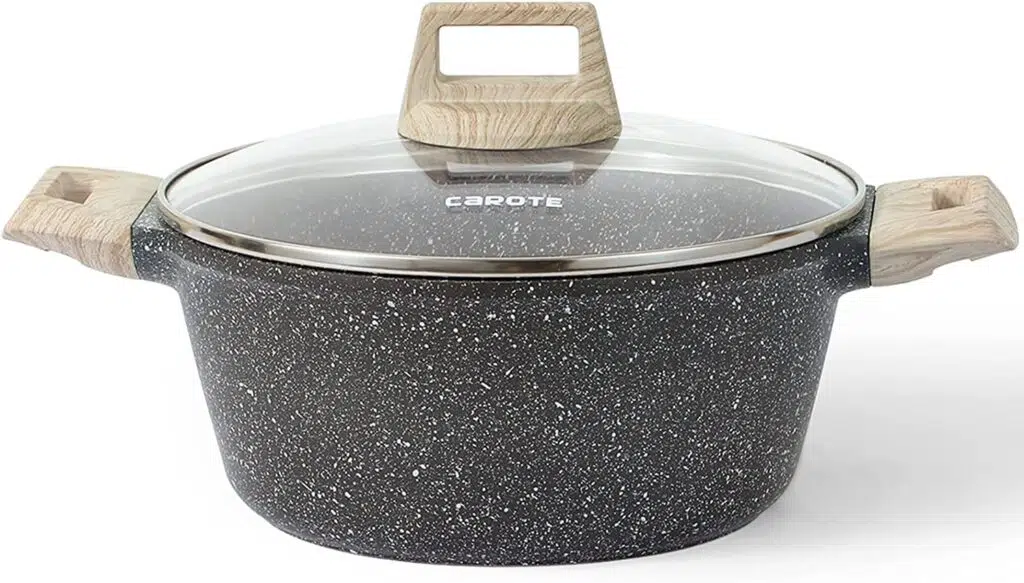
- Return the chicken to the pot. Add all remaining ingredients except the sugar snap peas. Season with salt and pepper and mix well. Bring to a boil, reduce heat, and simmer at a steady bubble for 20 minutes, stirring regularly.
- Add the sugar snap peas and continue cooking for 5 minutes.
- Serve over basmati rice, with naan bread, and garnish with fresh cilantro.
Chicken curry is a simmered dish made with chicken and spices (curry powder), originally from Indian cuisine but adapted worldwide. In Quebec we spell it « cari » (vs « curry » in English) — it’s just the Quebec spelling of the same word. Classic curry combines coconut milk, tomatoes, ginger, garlic and spices to create a fragrant, creamy sauce. Mild or spicy depending on the spice blend used.
None at the dish level — « cari » and « curry » mean the same thing. It’s just a spelling difference: « cari » is the Quebec/French spelling, « curry » is the English spelling. Both come from the Tamil word « kari » meaning « sauce ». So « cari de poulet » and « chicken curry » = exactly the same dish. You may also see « kari » or « cary » in some traditional recipes.
Yes, but I really recommend boneless skinless chicken thighs — they stay juicy even after 25 minutes of simmering. If you use breast, cut into large cubes and add it only 10 minutes before the end to prevent drying. Whole bone-in thighs also work (add 15 minutes of cooking). You can also mix cuts to vary textures.
Coconut milk is the heart of this recipe, but if you’re out, here are options: (1) 15% country-style cream + 1 teaspoon coconut extract — similar texture, more neutral taste; (2) Plain unsweetened yogurt + broth — lighter version, add at the end to prevent curdling; (3) Evaporated milk + a bit of curry paste — backup option. But honestly, coconut milk (light or regular) remains unbeatable for this recipe.
Absolutely! This curry freezes very well for up to 3 months. The coconut milk texture may change slightly (a bit less smooth), but the flavor stays excellent. Portion into airtight individual containers, let cool completely before freezing. To reheat: thaw in the fridge overnight, then reheat on low heat in a pot stirring often. Add a splash of broth or coconut milk if the sauce has thickened too much. Ideal for meal prep on busy nights.
Ads
Ads
Ads
Ads
Ads