

Orange-Braised Veal Cheeks
- Preparation 20 min
- Cooking 3 h 30 min
- Servings 4
- Freezing Absolutely
Ads
Orange-Braised Veal Cheeks 🍊
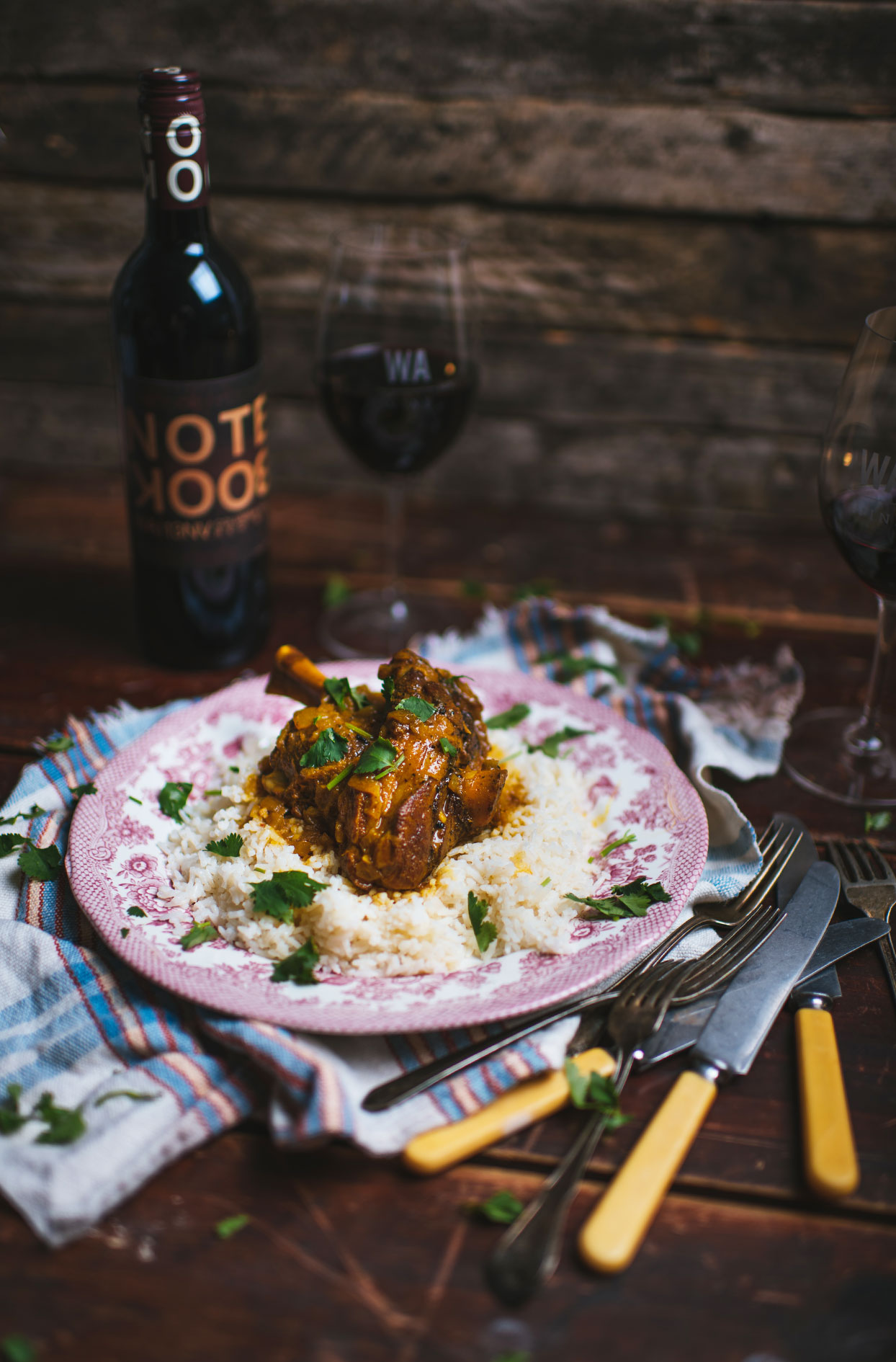
This is the kind of Saturday-night recipe that makes your intentions crystal clear. You’re hosting, the good plates are out, and the goal is simple: bold flavor. These orange-braised veal cheeks deliver exactly that. Ultra-tender meat, a deep, glossy sauce, and a sweet-savory twist that walks the line between classic French comfort and confident Asian inspiration. A dish made to impress, without turning dinner into a stressful production.
Red wine brings structure, soy sauce and hoisin add depth and umami, ginger wakes everything up, and orange ties it all together with just the right balance of freshness and roundness. After a few hours of gentle simmering, the veal cheeks become spoon-tender and the sauce reduces into a rich, crave-worthy concentrate.
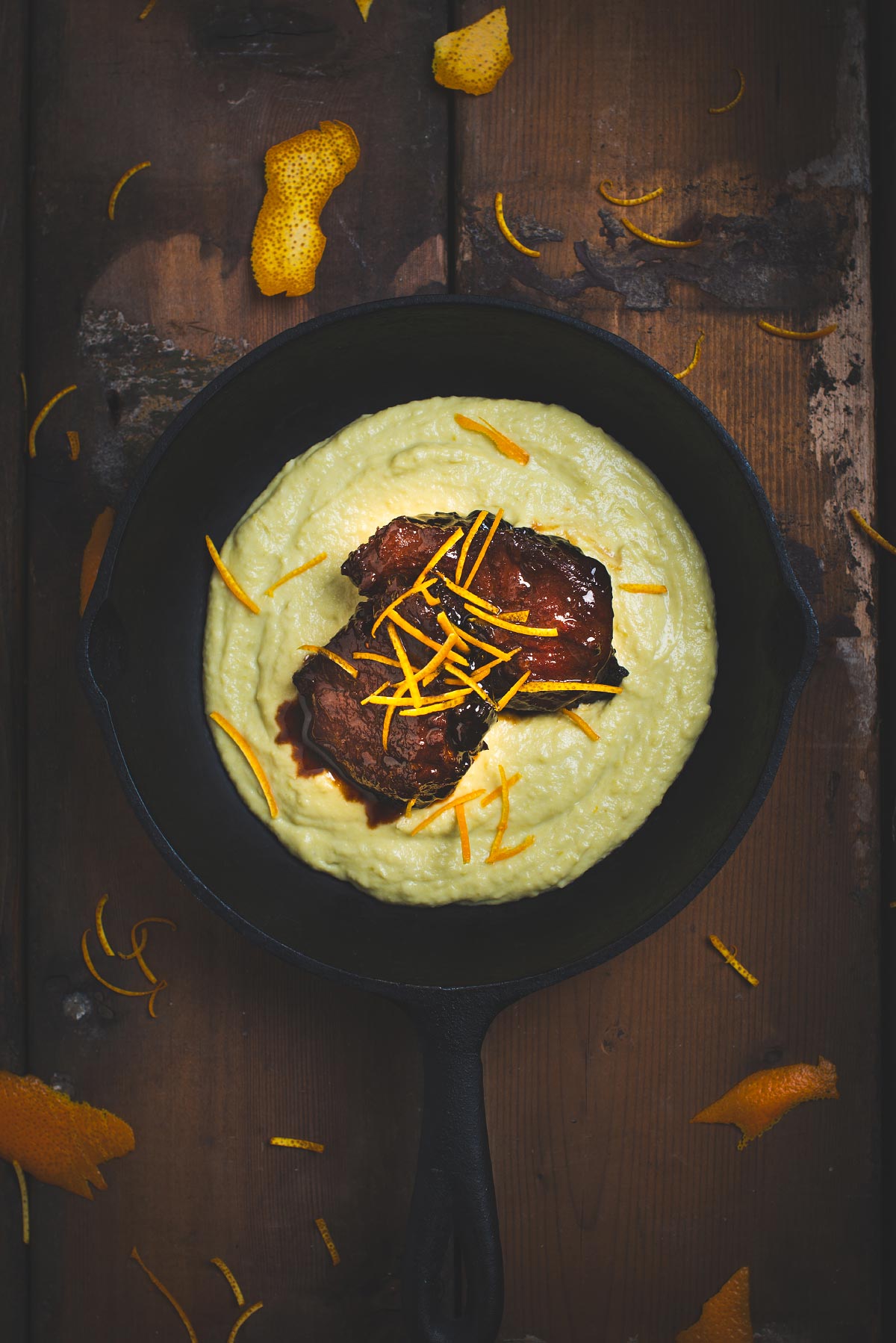
Served over a parsnip and green pea purée, generously coated in sauce and finished with a touch of orange zest, these orange braised veal cheeks become the centerpiece of a meal where everyone slows down, lingers a little longer, and goes back for seconds. A perfect recipe for entertaining, indulging, and turning a simple weekend into a memorable night around the table. 🍷
Ads
Ads
✅ Sear the meat properly
-
Take the time to really brown the veal cheeks at the start. Proper searing builds depth and complexity in the final sauce.
-
Avoid overcrowding the pot so the meat browns instead of steaming.
✅ Make-ahead friendly
-
Orange-braised veal cheeks are perfect for cooking ahead. Prepare the dish up to 48 hours in advance, let it cool completely, then refrigerate directly in its sauce.
-
Reheat very gently over low heat or in the oven, covered, adding a small splash of veal stock or water if needed. The meat will stay ultra-tender and the sauce even more flavorful.
✅ Storage
-
Store in an airtight container in the refrigerator for up to 3 days.
-
Reheat gently to preserve the melt-in-your-mouth texture of the veal.
✅ Freezing
-
Freezing is possible, but it may slightly affect the ultra-tender texture of the veal cheeks.
✅ Substitutions
-
Substitute veal cheeks with beef cheeks or a well-marbled chuck roast, adjusting the cooking time and liquid as needed.
-
Use a rich beef stock if veal stock is not available.
✅ Suggested sides
-
Parsnip purée, mashed potatoes, or celeriac purée to soak up the sauce.
-
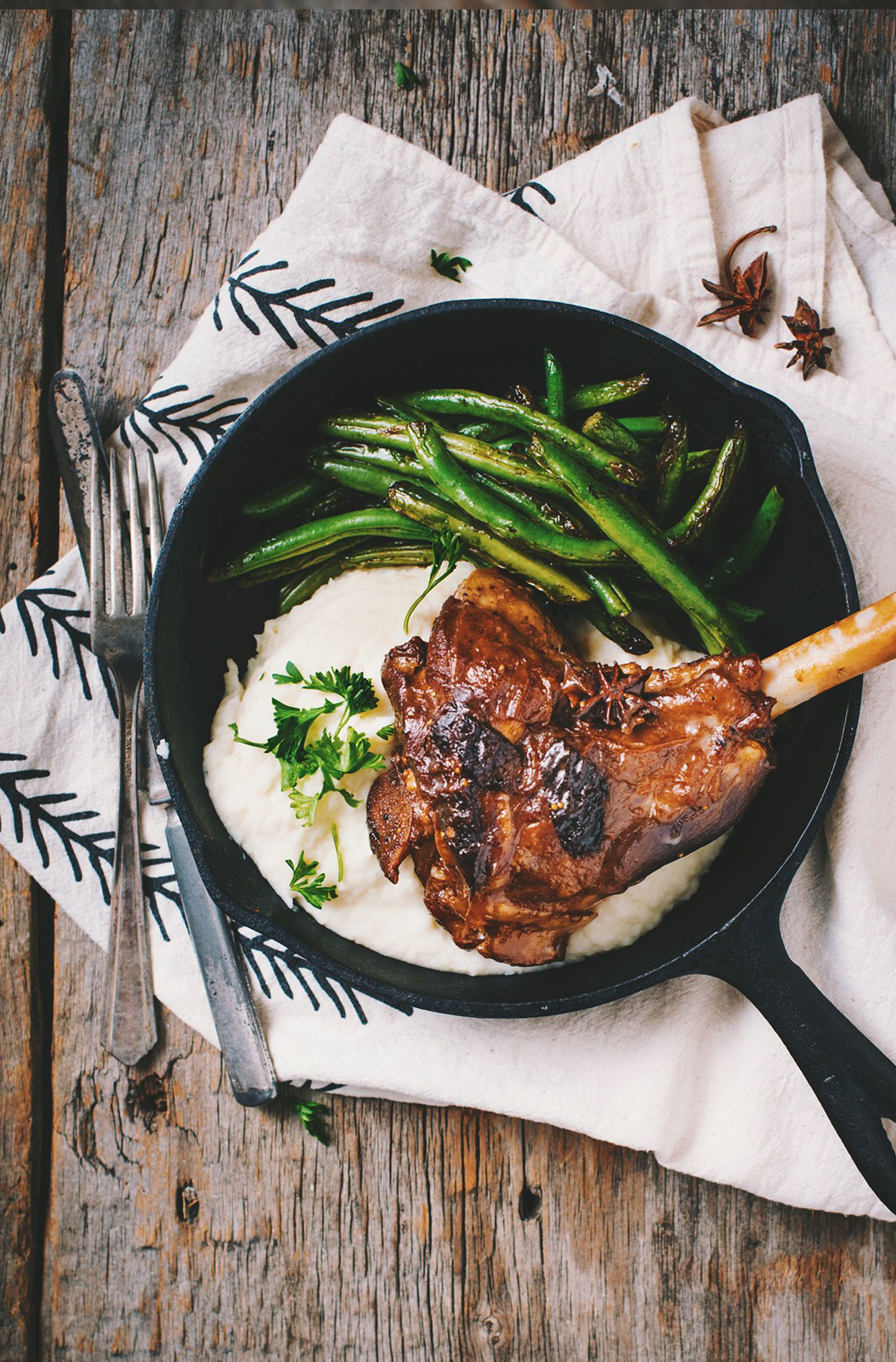
Roasted root vegetables or crisp green beans to balance the richness.
-
Warm rustic bread to mop up every last drop of sauce.
Ingredients for Orange-Braised Veal Cheeks 🍊
- 2 to 3 tsp olive oil
- 8 veal cheeks, trimmed
- 1 large red onion, finely chopped
- 4 garlic cloves, finely chopped
- 500 ml (2 cups) red wine
- 60 ml (¼ cup) soy sauce
- 3 tbsp hoisin sauce
- 2 tbsp freshly grated ginger
- 1 tbsp brown sugar
- Zest of ½ orange, plus extra for garnish
- Juice of 2 oranges
- About 750 ml (3 cups) veal stock
- Salt and freshly ground black pepper
Ads
Preparation
- Heat a large pot over medium heat. Add the olive oil and sear the veal cheeks for 3 to 4 minutes per side, until nicely browned. Season generously with salt and pepper. Remove from the pot and set aside.
- In the same pot, add the onion and garlic. Cook for 3 to 4 minutes, adding a little more oil if needed. Deglaze with the red wine, scraping the bottom of the pot to release all the flavorful bits.
- Return the veal cheeks to the pot. Add the soy sauce, hoisin sauce, ginger, brown sugar, orange zest and orange juice. Pour in enough veal stock to fully cover the meat. Season with salt and pepper, then stir well.
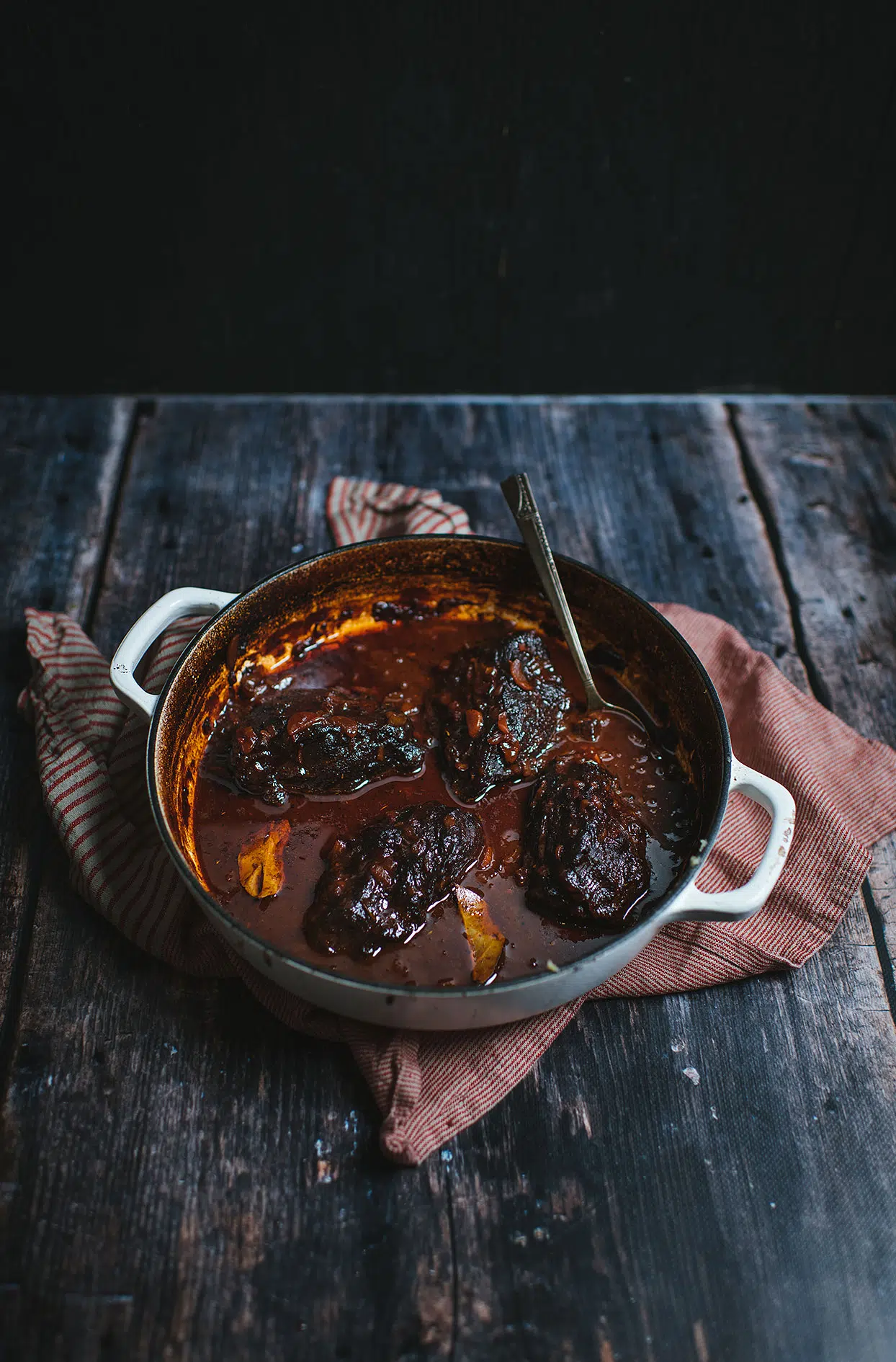
- Bring to a boil, reduce to low heat and simmer gently for about 3 hours, partially covered. Baste and turn the veal cheeks occasionally during cooking.
- Serve over a parsnip and green pea purée, generously spooned with sauce. Finish with a touch of fresh orange zest just before serving.
Veal cheeks come from the cheek muscles of the animal, a well-worked cut that is naturally rich in connective tissue. This makes them ideal for slow cooking, as they become incredibly tender and silky after a long, gentle braise. When cooked properly, veal cheeks are rich, flavorful, and deeply satisfying.
Yes, extremely tender when cooked the right way. Veal cheeks are best suited for slow, low-temperature cooking. After several hours of braising, the meat becomes melt-in-your-mouth tender, making them perfect for comforting, cold-weather dishes.
Veal cheeks should be seared first to build flavor, then slowly braised in a flavorful liquid. A gentle simmer for about 3 to 3½ hours allows the collagen to fully break down, resulting in ultra-tender meat and a rich, glossy sauce.
Ads
Ads

Ads
Ads
Ads