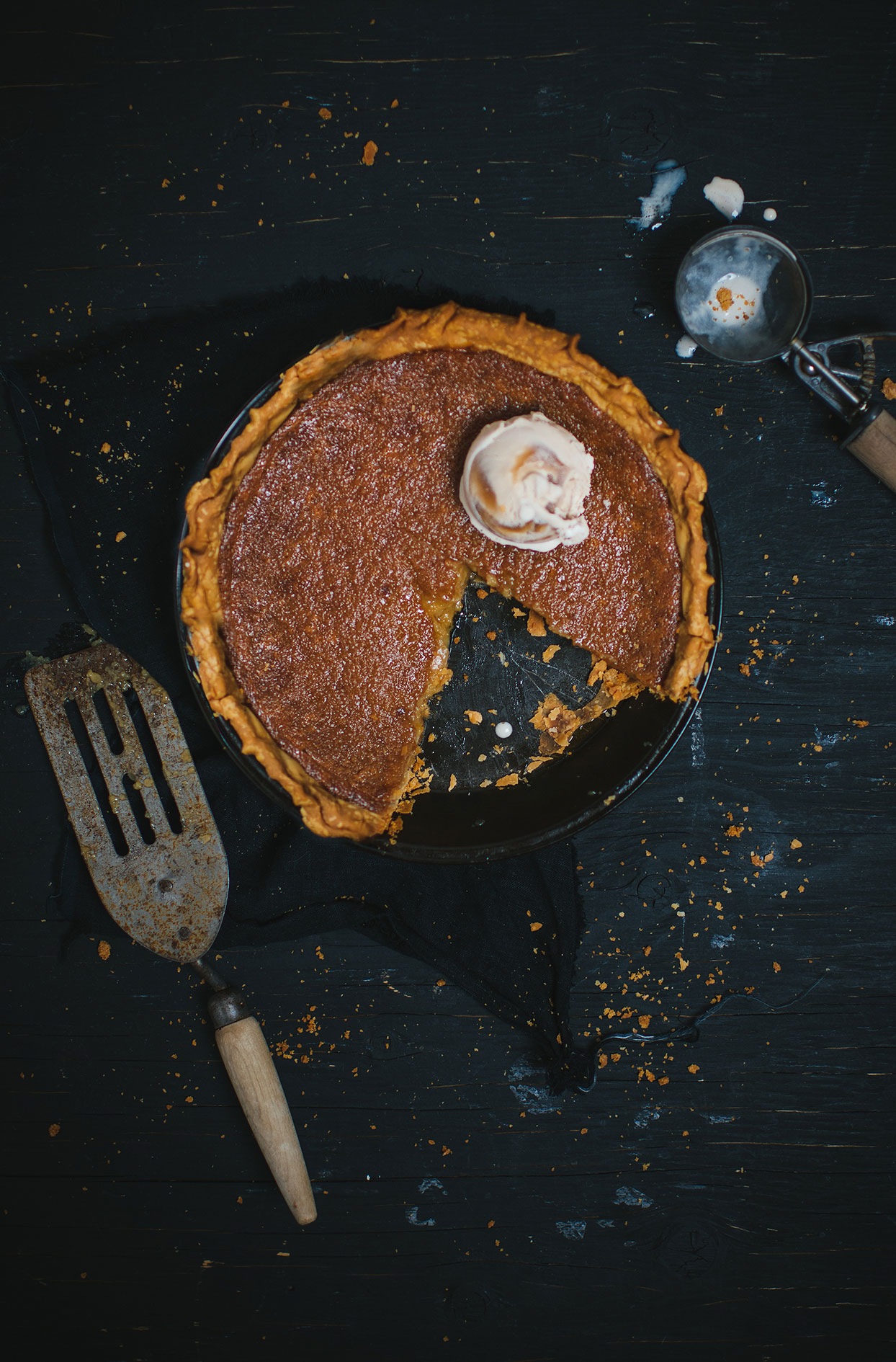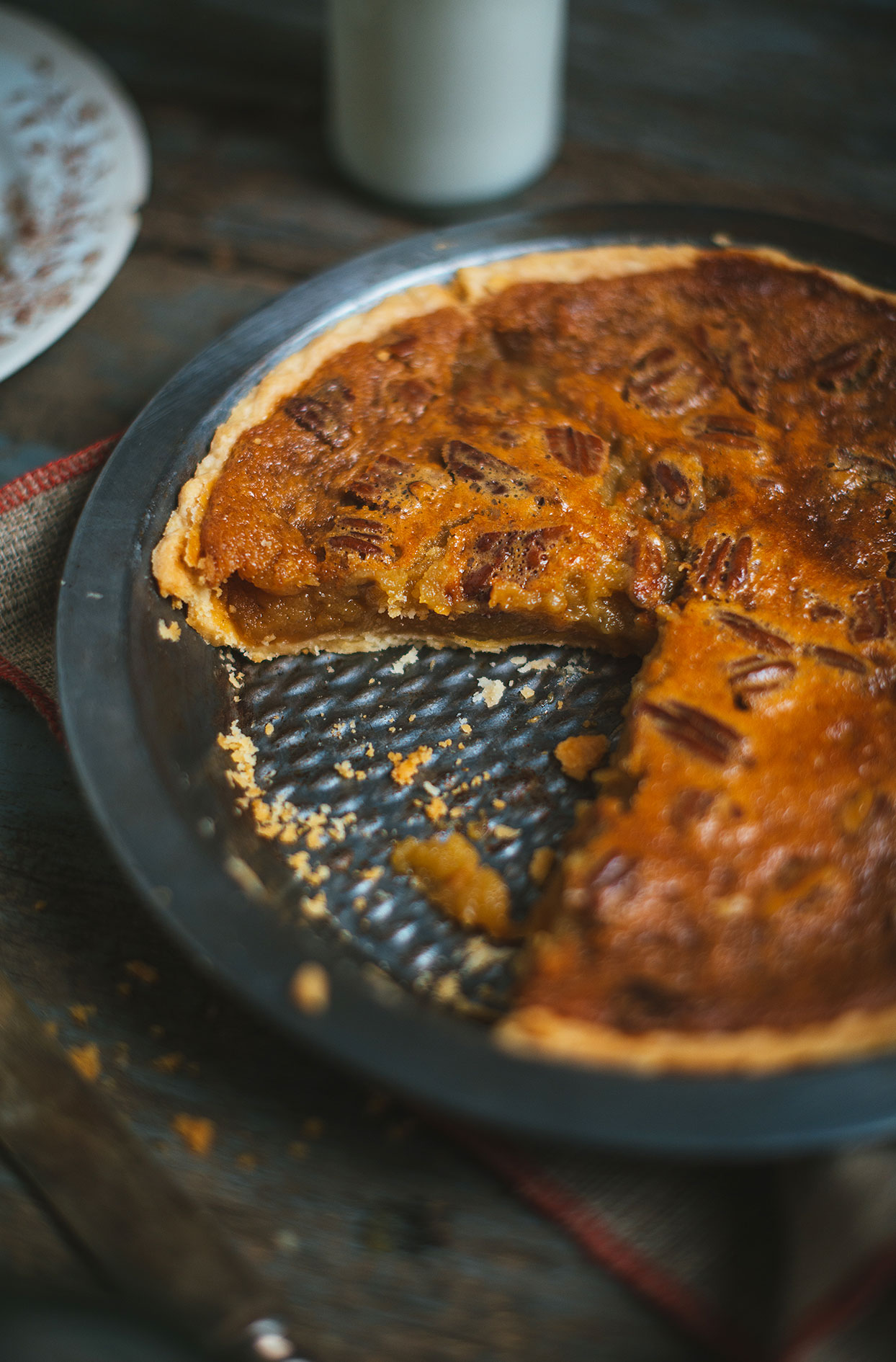
Very sweet corn syrup, caramel and toasted pecans in a buttery crust. The sugar clings to your mouth and the butter coats it: almost any light drink disappears next to that.
One simple rule: the drink has to be at least as sweet and as full as the pie. Strong ale, round and warm, with caramel and dried fruit, gets there, and brown ale is the second pick. For wine, a Douro port or a Quebec Vidal.
Classic, maple, chocolate, whisky or honey: the sugar, the cocoa or the alcohol changes which drink works. Each version has its own beers and wines, picked for the one on your plate.
The basic pairing
The classic syrup pie
A buttery crust filled with corn syrup, caramel and toasted pecans.
This Strong ale is round and malty, with caramel, dried fruit and a warmth that heats you up. The pie is very sweet, with syrup, caramel and toasted pecans. The two answer each other: the beer has the same caramel and enough body not to get flattened by the sugar. A light beer would not last a bite.
Brown ale is lighter than Strong ale, with caramel, hazelnut and toasted bread. It fits better if your slice is small, or if you want a beer that goes with the nuts without too much warmth.
This Douro port is sweet, with notes of raisin, fig, caramel and nuts. It is fortified, so it has body and warmth, and it is no less sweet than the pie. Next to the syrup and the toasted pecans, it tastes neither thin nor sour, and its nutty notes join those of the filling.
Quebec Vidal is a sweet late-harvest wine, with apricot and honey, livelier than port. It fits better if port feels heavy after such a buttery crust, because its acidity cleans your mouth.
An old fashioned is whisky, sugar and bitters, slow, woody and straight up. A classic pecan pie is very sweet, with its caramel, toasted nuts and buttery crust: the bitters calm the sugar, and the whisky meets the nutty flavour. Best served at the end of the meal, slowly.
Brown ale smells of caramel, hazelnut and toasted bread, with little bitterness. The maple in the pie has a deep sugar, a soft caramel taste, and the pecans are toasted. Brown ale picks up both notes and stays lighter than the syrup, so it goes with the maple without covering it.
Strong ale is rounder and warmer than Brown ale, with caramel and dried fruit. Reach for it if your pie is very syrupy, or if you want a beer that holds the maple sugar all the way through.
Quebec Vidal is a sweet wine, with apricot, honey and a clear, bright acidity. It is local like the maple, and its round sugar goes with the syrup taste. The acidity keeps the whole thing from sticking to your mouth, and the toasted nuts keep their flavour instead of drowning in sugar.
Douro port is heavier and fuller than Vidal, with raisin, fig and nut. It fits better if the pie is dense and loaded with pecans, because it has the body to hold up the buttery crust.
An old fashioned, whisky, sugar and bitters, slow and woody. With a maple pecan pie, sweet maple and toasted nuts, the woodiness of the whisky meets the nuts and the bitters hold the sugar back.
Alcohol-free version: Smoky black tea, maple syrup and orange peel over one big ice cubeAn old fashioned is oak, a little sugar and orange: smoky tea and maple do the same.
Stout is black and roasty, with notes of coffee and dark chocolate. The chocolate pie is rich and sweet, with cocoa, caramel and pecans. The dark chocolate in the beer joins the cocoa in the pie, and its coffee bitterness cuts the sugar without the beer turning thin.
Porter is lighter than Stout, with chocolate, caramel and a soft coffee. It fits better if Stout feels too bitter next to the pie, or if you want a less heavy beer.
This Douro port is sweet, with notes of dark fruit, raisin and caramel. The cocoa in the pie is rich and a little bitter, and the dark fruit in the port goes very well with chocolate. The wine has enough sugar and body not to get flattened by the cocoa or the caramel.
Rhône Valley Syrah is a dry, full-bodied red, with pepper and dark fruit. It fits better if you prefer a red to a sweet wine: it goes better with a slice that is less sweet and rich in cocoa.
An espresso martini, strong coffee, vodka and coffee liqueur, under a dense foam. With a chocolate pecan pie, very rich, with cocoa, caramel and toasted nuts, the bitterness of the coffee joins the cocoa and lightens the richness.
Our recipe → · Alcohol-free version: Frothy iced coffee: espresso and vanilla syrup, shaken hard with iceShaken hard with ice, the espresso foams up, and the foam is what makes the martini so silky.
Strong ale is round and warm, with caramel and dried fruit. The whisky or bourbon in the pie adds a warmth of alcohol to the caramel and the toasted nuts. The beer has the same warmth and the same weight, so it goes along with the alcohol instead of fighting it, and its caramel joins that of the syrup.
Stout brings coffee and dark chocolate, with a roasted taste that follows the toasted nuts. It comes out ahead if you want a bitter contrast against the warmth and the sugar, rather than one more caramel.
Douro port is sweet and fortified, with raisin, fig and caramel. It has a warmth of alcohol too, which lets it keep up with the whisky or bourbon in the pie without being dominated. Its sugar joins the caramel in the syrup, and its nutty notes go with the pecans.
Quebec Vidal is lighter than port, with apricot, honey and acidity. It comes out ahead if the alcohol warmth is strong in your pie, because its acidity refreshes your mouth between bites.
An old fashioned, whisky, sugar and bitters, woody and slow to sip. A pecan pie made with whisky or bourbon keeps a caramel note and a warmth of spirit: the glass speaks the same language, and the bitters stop the sugar from getting heavy.
Alcohol-free version: Smoky black tea, maple syrup and orange peel over one big ice cubeAn old fashioned is oak, a little sugar and orange: smoky tea and maple do the same.
Brown ale is malty, with soft caramel, hazelnut and toasted bread. The honey in the pie is soft and floral, lighter than corn syrup, and the pecans are toasted. Brown ale follows that soft caramel without flattening it, and its hazelnut goes with the nuts.
Strong ale is rounder and warmer, with dried fruit and caramel. Reach for it if your pie is very rich, or if you want a beer that stays present next to the honey and the toasted nuts.
Quebec Vidal is sweet, with apricot, honey and an acidity that keeps it fresh. The honey in the pie is soft, and the wine has honey notes too. The acidity cuts through the buttery crust, and the sugar in the wine is not stronger than that of the pie, so the pecans stay at the centre.
Moscato d'Asti is light, with a small soft fizz, peach and orange blossom. Try it if you want a fresh, light wine that perfumes the honey without adding weight after the buttery crust.
A bee's knees, gin, honey and lemon, soft and bright at once. With a honey pecan pie, gentle caramel and toasted nuts, the honey in the glass meets the honey in the pie and the lemon keeps everything from feeling sticky.
Alcohol-free version: Honey and ginger lemonadeLemon and honey are the whole Bee's Knees, and the ginger stands in for the gin's bite.
A honey pecan pie is sweet with no detours, so the beer has to be too. The honey scotch ale gives port, vanilla and dried fruit, and its honey meets the one in the filling. It's served like a digestif, in a small amount, at the very end of the meal.
This 100% Vidal ice wine made in Québec is a treat! With notes of very ripe pear, green apple, honey and apricot, it's mineral and its finish is salty and very pleasant. Impeccable with desserts based on nuts, pears, honey or white chocolate.
With my maple syrup pie, a tawny port is the right reflex. Its notes of nuts, caramel and dried fruit meet the syrup instead of getting crushed by the sugar. It's sipped in a small glass, without rushing. A tawny like this one is happy to take its time. Serve it barely chilled, alongside your slice of pie.