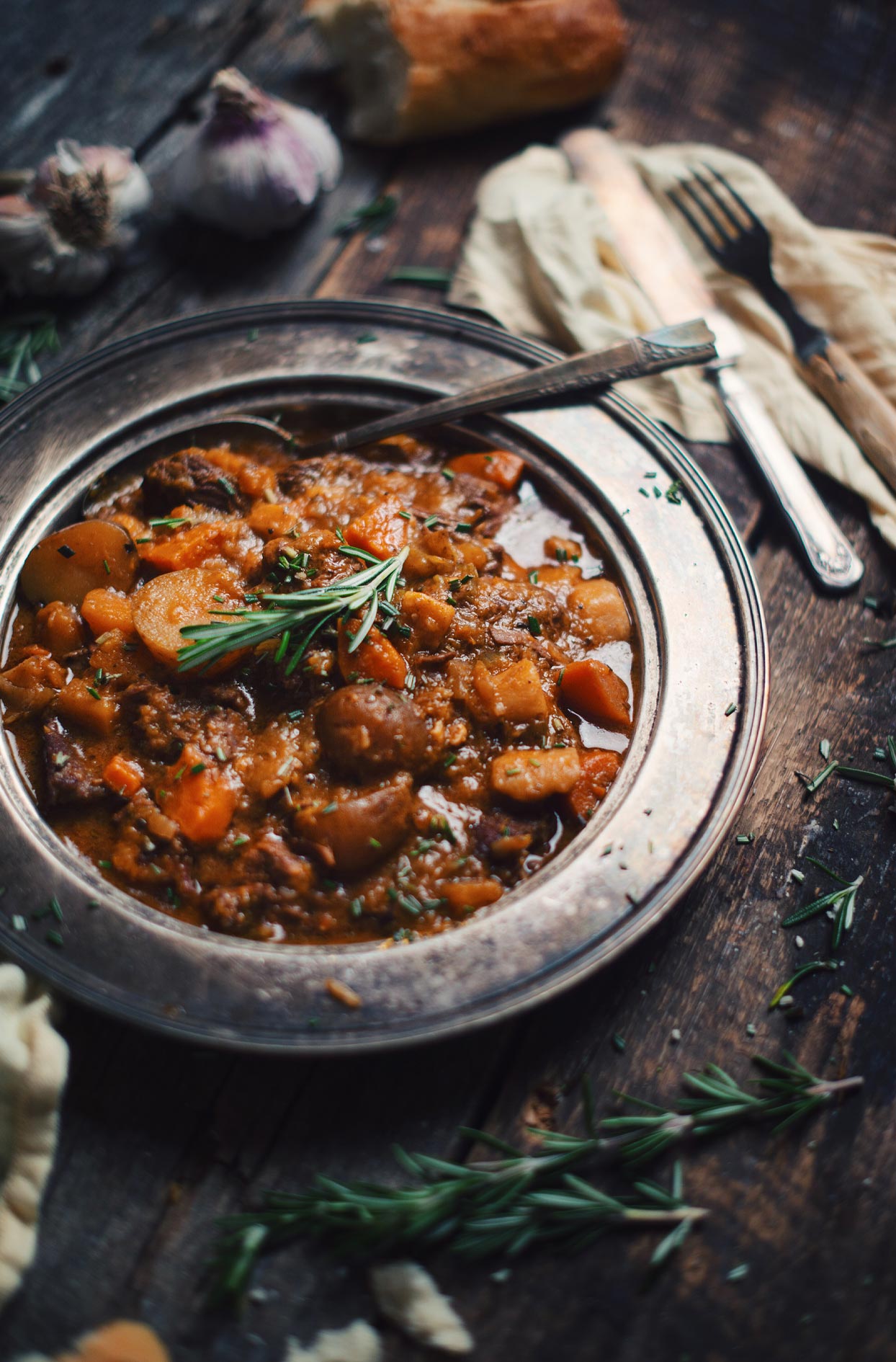
Beef braised for hours in a thick sauce of onion, tomato and sweet paprika. The meat falls apart and the sauce clings to the spoon. It isn't spicy, but it's full.
Amber ale is our go-to beer: its caramel malt joins the brown braising sauce and its discreet hop lets the paprika speak. Brown ale comes second, rounder and darker, for a goulash that has simmered for hours and whose sauce is almost brown. For wine, a Syrah, with a Sangiovese behind it.
Hungarian goulash with sweet paprika is the base. Spicier, it calls for a drink with no bitterness. With pork, with pasta or as a soup, the weight of the sauce changes. Each of these goulashes gets its own beer and wine, named below.
The basic pairing
Hungarian goulash with beef
Beef braised for a long time with sweet paprika, onion and tomato.
Hungarian goulash is beef braised in a red juice of sweet paprika, onion and tomato. This amber ale, with its caramel malt and light roast, follows the brown sauce without weighing it down, and its medium bitterness keeps the cooked onion from turning syrupy. A braising beer for a braised dish!
Brown ale is rounder and darker, with hazelnut and a little chocolate. Take it if your goulash has simmered for a long time and the sauce is very reduced, almost brown.
This Rhône Valley Syrah smells of black pepper, blackberry and a little smoked meat, with a firm tannin that dries the mouth. Against braised beef, the tannin grips the fibres of the meat, and the pepper in the wine joins the spices of the paprika. It has enough fruit to stand up to the thick red sauce.
Tuscan Sangiovese smells of sour cherry and dried herbs, with a bright acidity. Take it if your sauce is very tomatoey: its acidity follows that of the tomato instead of getting crushed.
An old fashioned gives you whisky, sugar and bitters, woody and slow. Hungarian goulash with braised beef, mild paprika, onion and tomato is simmered and comforting: the woodiness of the whisky goes with the braise and the sugar joins the sweetness of the paprika and onion. For a cold November evening.
Or a Manhattan, whisky and sweet vermouth, silky, with a cherry at the bottom. Take it when you want something rounder, that hugs the sweetness of the sauce.
Alcohol-free
An alcohol-free amber ale
A slow-cooked dish is rich, deep and long on the palate. Its caramel and hazelnut side suits roasted meats, brown sauces and grilled vegetables.
With a hot paprika, the fire is in the sauce, and the bitterness of a hoppy beer would stoke it. Lager is light, cold and without marked bitterness, with a fresh bread malt. It refreshes the mouth between bites of spicy beef and keeps the braised meat in the foreground.
Amber ale has a caramel malt whose sweetness calms the fire a little. Take it if the heat stays moderate and you want a beer with more body than the lager, for the thick sauce.
Beaujolais Gamay smells of strawberry, cherry and violet, with almost no tannin. That's what matters here: tannin stokes the heat, while a juicy, supple red lets it pass. Served a little cool, it puts out the hot paprika while keeping enough fruit against the spicy braised beef.
Rhône Grenache is rounder, with ripe raspberry and sweet spices, and also very little tannin. Take it if the heat is medium and the sauce is thick: it has more flesh than the Gamay.
A spicy goulash with hot paprika, beef and a thick sauce: the old fashioned, whisky, sugar and bitters, woody and unfussy, has the body for the thick sauce and its sugar tames the paprika's heat a little.
Alcohol-free version: Smoky black tea, maple syrup and orange peel over one big ice cubeAn old fashioned is oak, a little sugar and orange: smoky tea and maple do the same.
Braised pork is milder than beef, and the sour cream adds a touch of acidity. Amber ale, with its caramel malt and roundness, follows the paprika sauce without crushing the pork. Its discreet bitterness lets the sour cream breathe, and the caramel extends the slightly sweet side of the meat.
Blonde ale is lighter, with a grain flavour and a little honey. Take it if your pork goulash is creamy, with lots of sour cream, or if you want a fresher beer.
Burgundy Pinot noir smells of cherry and raspberry, with a light texture and very little tannin. Braised pork doesn't have the strength of beef, so a light red suits it, and the acidity of the wine answers that of the sour cream. The paprika stays mild, and the pork stays tender in your mouth to the last bite.
Alsace Pinot gris smells of pear and honey, with a hint of smoke and a round, almost rich body. Take it if you'd rather have a white: its roundness hugs the sour cream and the pork.
A pork goulash, braised pork, paprika and sour cream: the old fashioned, whisky, sugar and bitters, woody and unfussy, follows the braised pork with its wood and its sugar rounds off the paprika.
Alcohol-free version: Smoky black tea, maple syrup and orange peel over one big ice cubeAn old fashioned is oak, a little sugar and orange: smoky tea and maple do the same.
Buttered egg noodles or spaetzle soften the paprika sauce and make the dish a tender meal. Amber ale keeps its caramel malt but stays supple: it follows the butter without weighing it down, and its moderate bitterness keeps the mouth fresh between forkfuls.
Blonde ale is the lighter of the two, with a grain and honey flavour. Take it if the noodles are very buttery and you're looking for a beer that cleans the mouth without adding anything.
Beaujolais Gamay is a juicy, light red that tastes of strawberry and cherry, almost without tannin. With buttered noodles under a paprika sauce, a supple red is enough: it follows the beef without toughening the noodles, and its freshness cuts the butter. You drink it without thinking, which suits a comfort dish.
Alsace Pinot blanc smells of apple and white flower, with a soft acidity and a medium body. Take it if you'd rather have a white: it's round enough for the butter of the noodles and fresh enough for the sauce.
Goulash with egg noodles or spaetzle, paprika sauce and buttered noodles: the old fashioned, whisky, sugar and bitters, woody and slow, backs up the paprika sauce and its bitters cut the butter on the noodles.
Alcohol-free version: Smoky black tea, maple syrup and orange peel over one big ice cubeAn old fashioned is oak, a little sugar and orange: smoky tea and maple do the same.
In goulash soup, the paprika and the beef come together in a broth with potatoes. Brown ale, with its notes of hazelnut, caramel and toasted bread, gives the same comfort as the hot broth. It's round without being sweet, and follows the potatoes and the meat with every spoonful.
Amber ale is less dark and livelier than the brown ale, with a light caramel. Take it if the brown ale seems too heavy next to a broth, or if your soup is well spiked with paprika.
Rhône Valley Syrah smells of pepper and blackberry, with tannin and a little smoke. A soup is thinner than a stew, but the beef and paprika are still present enough to hold up a red. The pepper in the wine joins the paprika, and the potatoes in the broth soften the tannin, which dries the mouth less.
Tuscan Sangiovese is a bright red with sour cherries and dried herbs that refreshes the mouth. Take it if the soup contains tomato or lots of vegetables: its acidity follows the broth and lightens it.
A goulash soup, paprika broth, potatoes and beef: the old fashioned, whisky, sugar and bitters, woody and unfussy, warms the paprika in the broth with its wood and holds its own against the beef.
Alcohol-free version: Smoky black tea, maple syrup and orange peel over one big ice cubeAn old fashioned is oak, a little sugar and orange: smoky tea and maple do the same.
Born between the Andes and the Pacific, this Chilean red is all about the fruit. The blend of Cabernet Sauvignon (75%) and Syrah (25%) gives a supple, fresh, pleasantly spicy palate. It's the ideal all-rounder for this beef and beer stew: affordable, easy-drinking and great for the cold season.
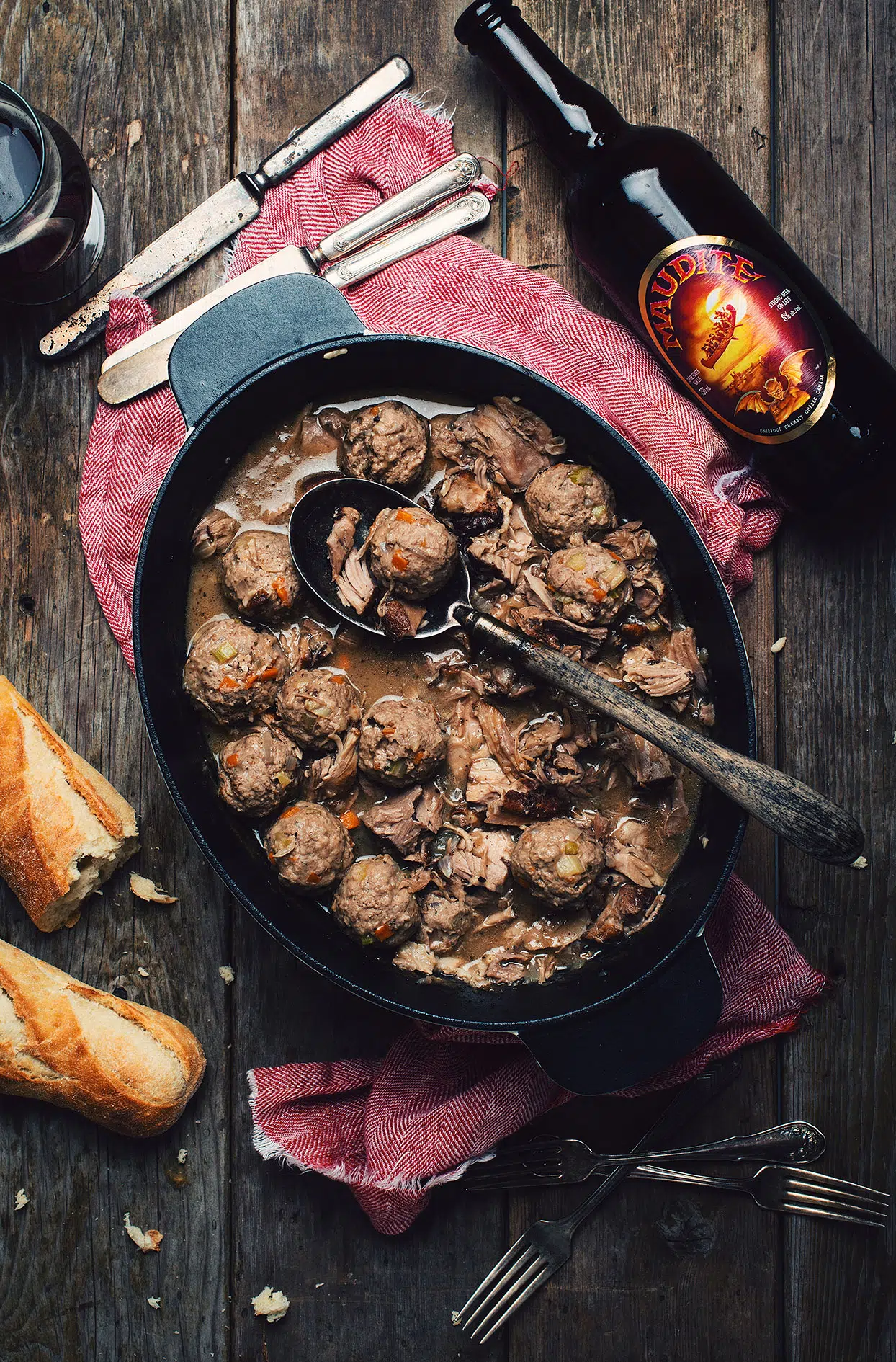
Meatballs, pigs' feet, toasted flour: the holiday stew is heavy and owns it. The malt, orange and clove in the beer fall exactly into the spices of the dish, and its alcohol cuts through the brown sauce. A family table pairing.
A great, excellent Portuguese. At a more than reasonable price! Complex nose of pepper, forest floor, a hint of oak, slightly jammy raspberry, smoke, rosewood. Even olives. Complex enough for you? The palate is powerful, with a long finish and rounded tannins. What a wine!
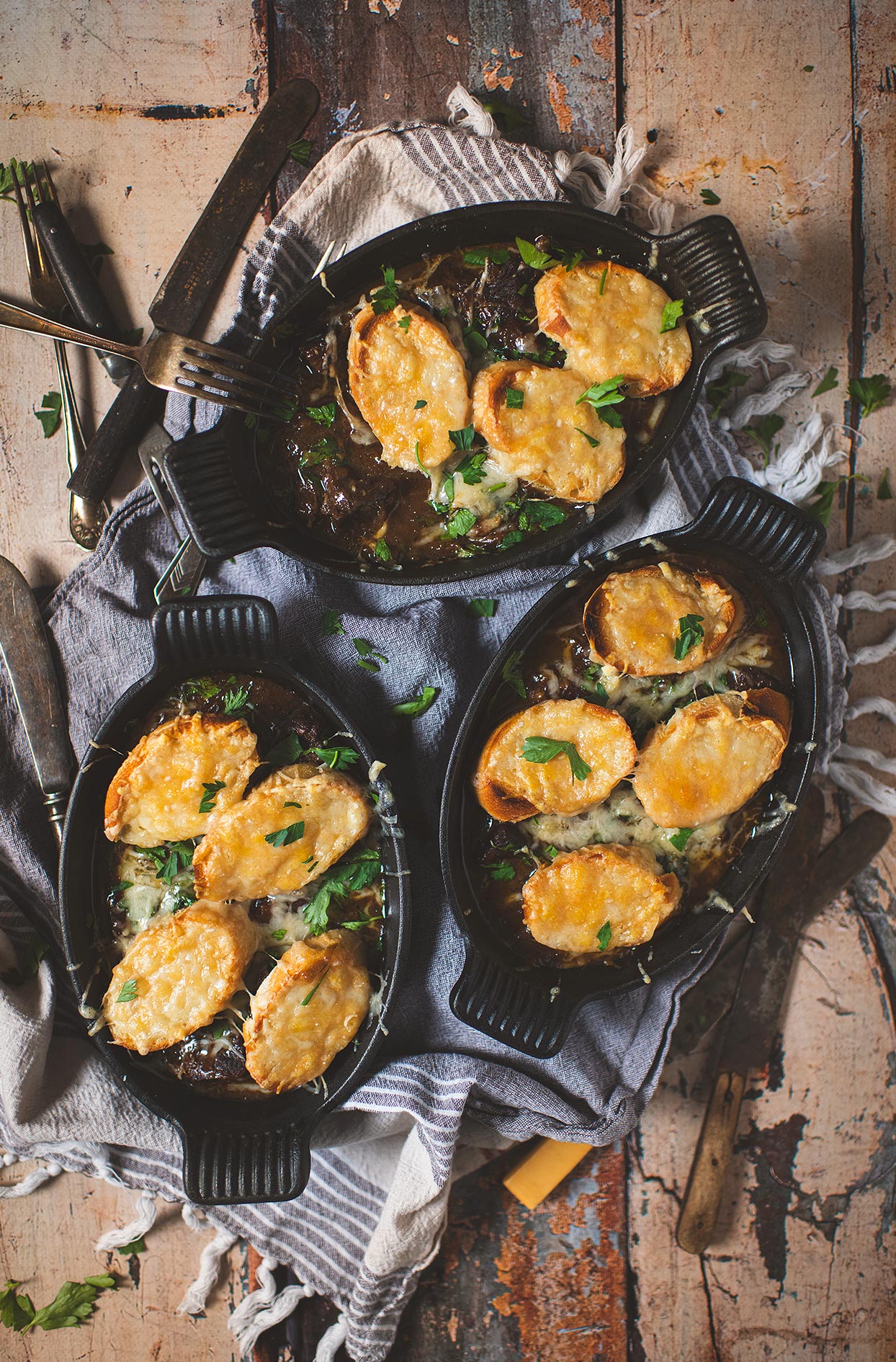
Gratinéed cheese on a beef stew is rich all the way to the bottom of the bowl. A sweet stout, with coffee and dark chocolate, cuts into it with its roast and moves on. The char of the beer extends that of the slow-cooked onions, so nothing clashes.
Barbera, with its nice acidity and its aromas of black cherry and plum, brings a freshness that balances the rich side of this beef stew with gratinéed onion soup.