

Homemade creme brulee
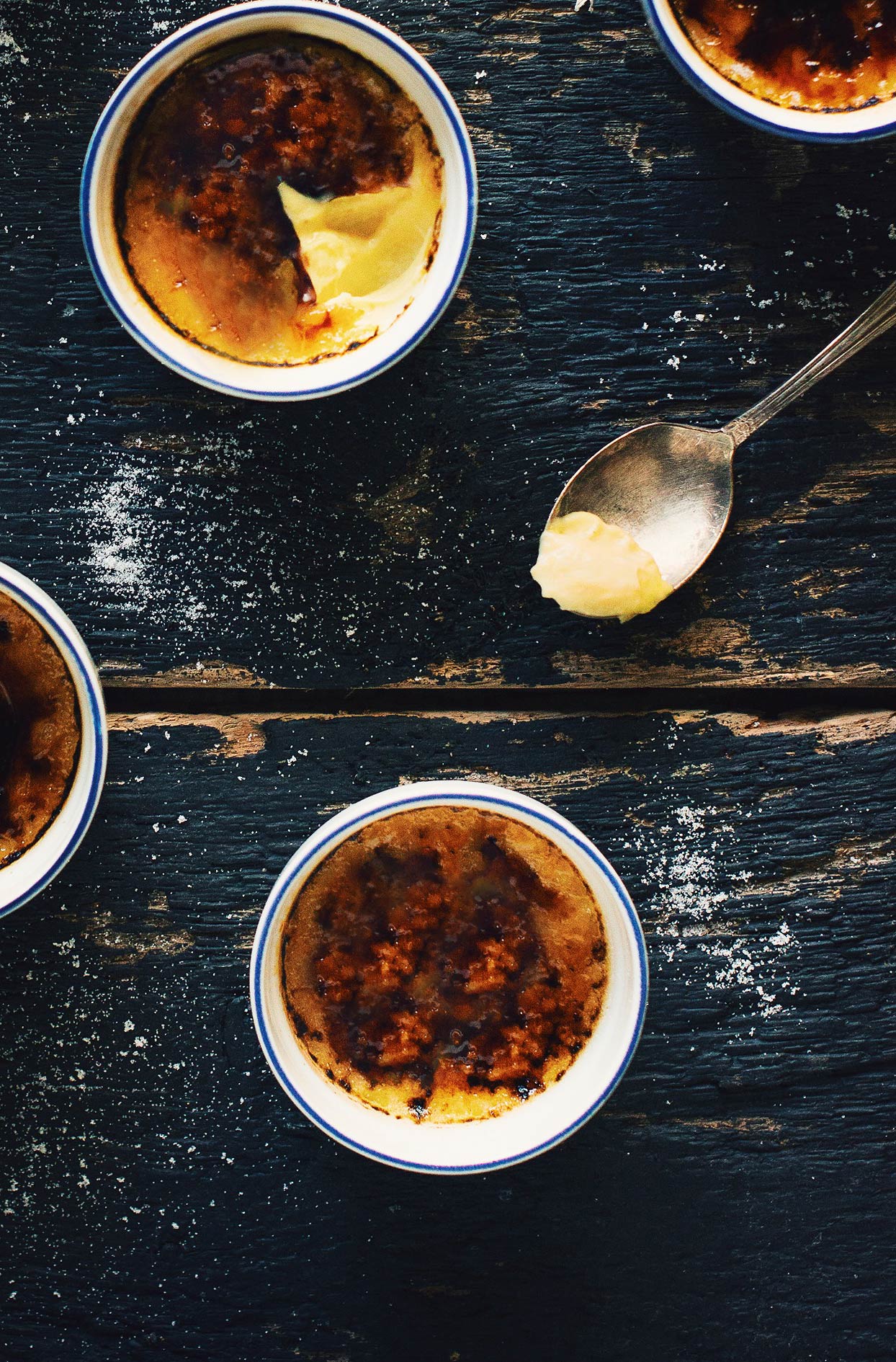
- Preparation 1 h
- Refrigeration 4 to 6 h
- Cooking 50 min
- Servings 6
- Freezing Absolutely
Ads
🍮 A creme brulee that tastes like creme brulee
This one goes back to the first desserts I ever put on the site. What I want from a creme brulee is simple: it has to taste like vanilla and it has to taste like creme brulee. Restaurants keep turning it into chocolate, tea, lavender, whatever is trendy that month, and by then you are not tasting the dessert anymore. You are tasting somebody’s idea. I keep the thing itself. Cream, egg yolks, sugar, a real vanilla bean steeped in warm milk. That’s the whole list.
🔥 Cold inside, warm on top
That’s the secret, and almost nobody writes it down. I bake the custards in a water bath, let them set in the fridge overnight, and the sugar never touches the top until the moment I serve. A torch, a few seconds, and the crust is still warm when the spoon cracks through. Caramelize early and you get a soft crust on a lukewarm custard. Two mistakes for the price of one.
🎄 The holiday dessert you cannot ruin
Everything happens the day before. On the night of the dinner all you have left is a spoonful of sugar to spread and a torch to light in front of everyone.
Ads
Ads
❄️ Cold inside, warm on top
This is the most important tip on the page and the one nobody bothers writing. A good creme brulee is not just sweet custard with burnt sugar on it. It is a temperature contrast. The custard comes out of the fridge cold, and the crust is still hot when your spoon goes in.
Which means the order of operations matters more than the recipe. Bake, cool, forget them in the fridge. The sugar goes on at the table, not a minute earlier. Caramelize all six ramekins while everyone is finishing the main course and the heat sinks into the custard, the crust softens, and you serve a lukewarm dessert with a sticky top. I made that mistake often enough to talk about it.
🔥 Torch first, broiler second
I use a torch. It is fast, it burns only the surface, and the custard stays cold underneath. The broiler works too: rack in the middle of the oven, not at the top, and do not walk away. The crust sets in two or three minutes and goes from golden to black in seconds. The real downside of the oven is that it warms the custard at the same time, so back to the fridge if you have a few minutes.
⏱️ Four to six hours in the fridge, overnight if you can
Lift the ramekins out of the water bath, let them sit on the counter for thirty minutes, then chill them. Four to six hours is the minimum I trust. A full night is better. The centers keep setting during that time.
🥣 Deep ramekins change nothing about the crust
You read everywhere that shallow ramekins give a better crust. I disagree. The crust is the sugar you sprinkle on top and nothing else. Your ramekin could be a mile deep and the crust would be exactly the same. Mine are deep. What depth does change is baking time, so watch that instead.
🍮 The center should still wobble
When the ramekins come out of the oven the custard is not set, and that is exactly right. It finishes setting in the cold.
📅 Make it ahead
Yes, and that is how it is meant to work. Bake the custards up to two days early, cover them, leave them in the fridge. Sugar and torch happen at the last second, in front of your guests. What you must never do is caramelize ahead to save time: a crust made two hours earlier melts into the custard and the crackle is gone.
✅ What do I serve with my homemade creme brulee?
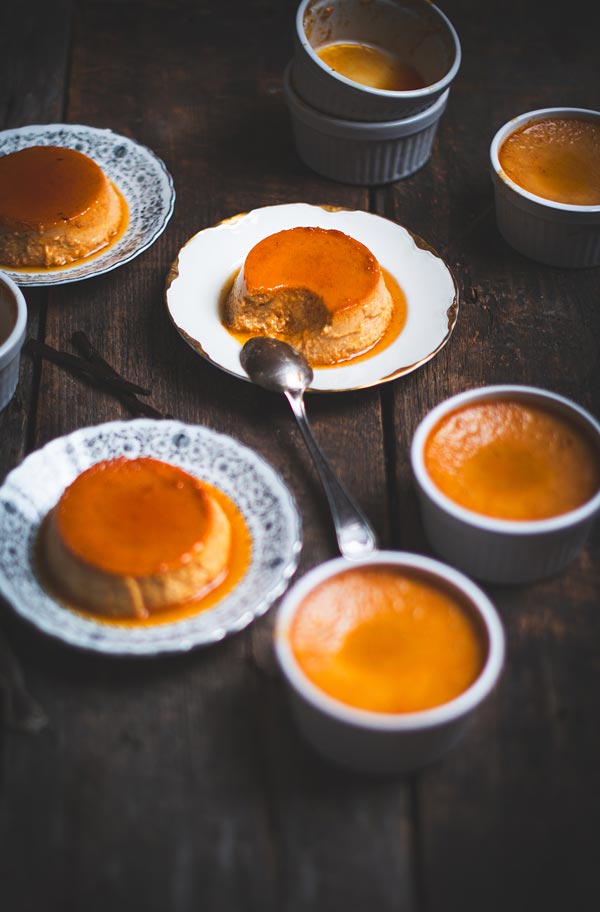
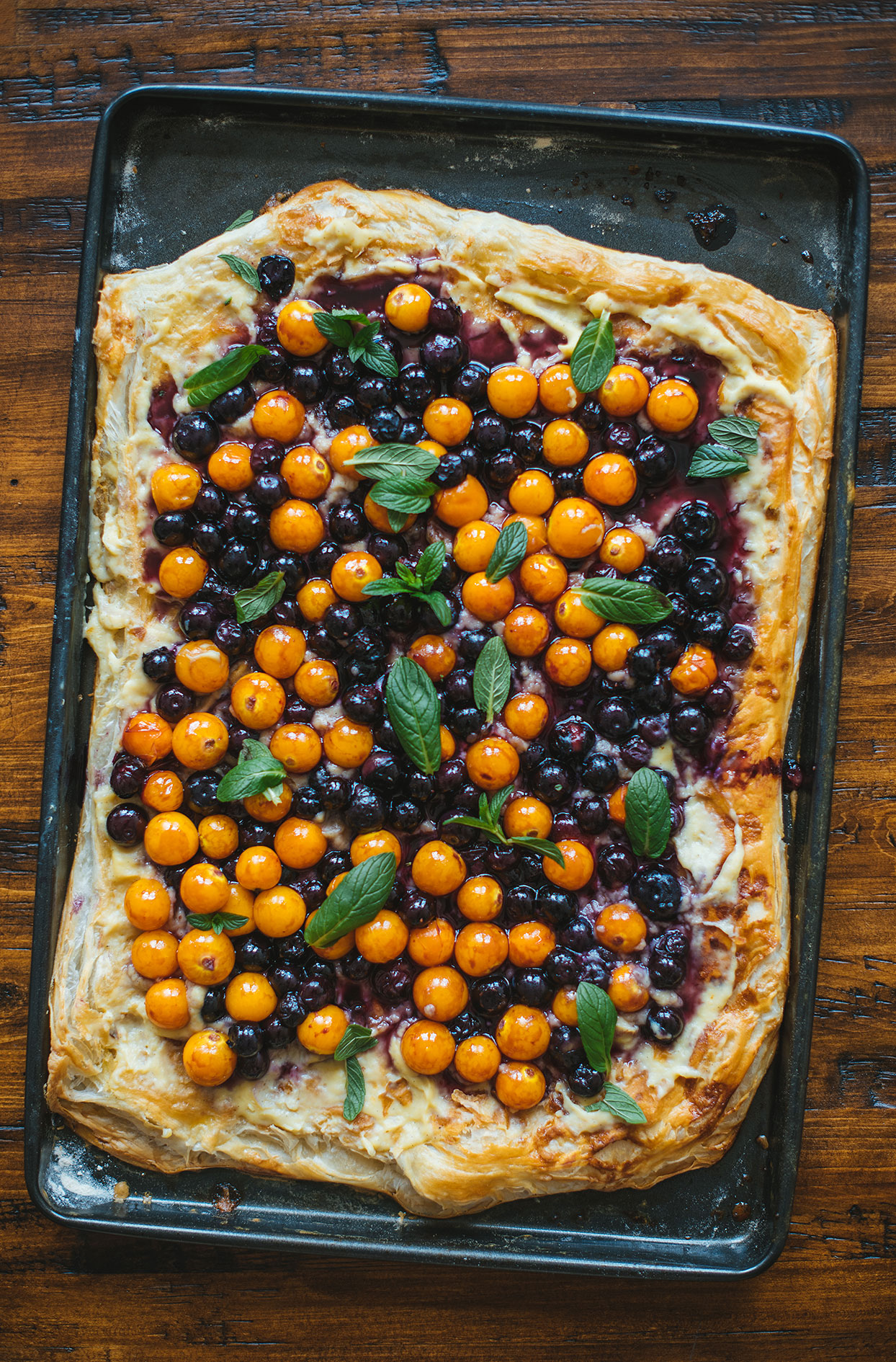
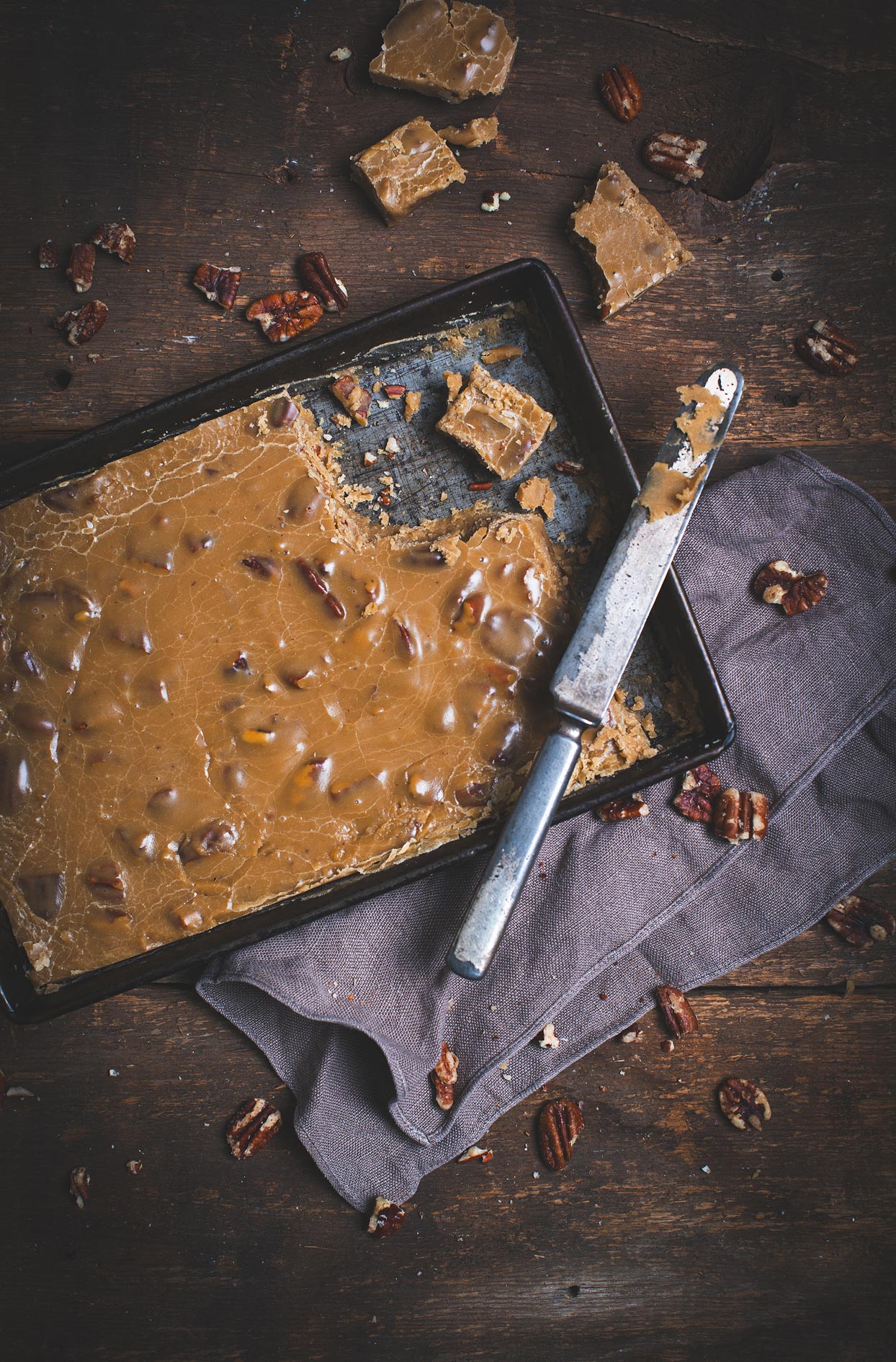
Nothing. It is a complete dessert and it needs no help. If you are building a dessert table for a big dinner, put it next to my grandma’s brown sugar fudge and a berry and custard tart. Around the holidays I often serve it after a pumpkin creme caramel or a maple pouding chomeur, depending on the crowd.

Ads
Ingredients
- 50 ml milk
- 1/2 vanilla bean
- 5 egg yolks
- 90 g fine sugar (about 7 tablespoons)
- 400 ml (1 2/3 cup) 35% cream
- 6 x 1 1/2 teaspoon (7.5 ml) of sugar, for the crust
Ads
Preparation
- Preheat the oven at 325°F (160°C).
- In a small sauce pan, heat the milk at minimum. Scrape the seeds out of the bean and add it to the milk. Cut the bean in 3 chunks and add it to the milk as well.
- Infuse the vanilla for about 5-6 minutes then remove the bean chunks. Remove from heat and set aside.
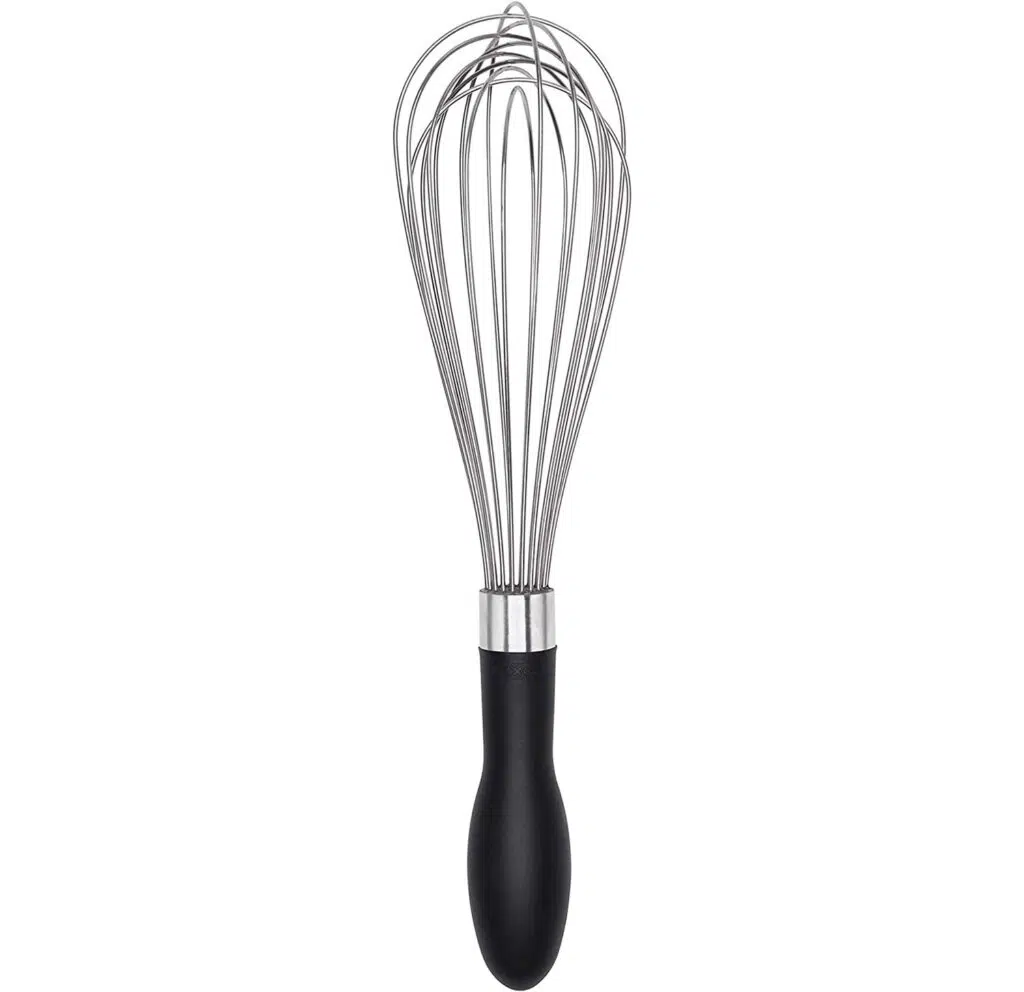
- In a big bowl, whip vigorously the sugar and the egg yolks together for about 5 minutes. After some time, the mix will change color and get whiter. Then, add the cream and mix well.
- Incorporate slowly the milk in the egg mix and mix well to melt the sugar.
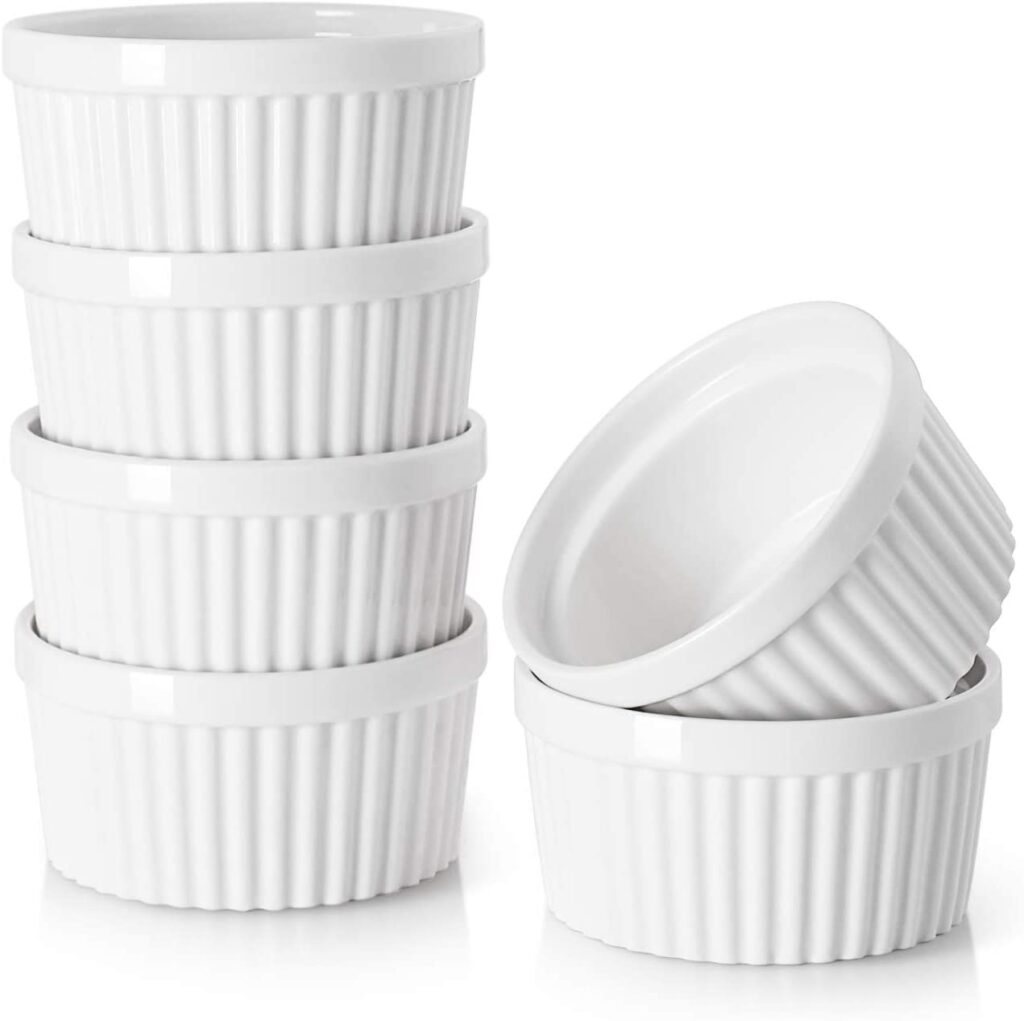
- Distribute the mix into 6 ramekins.
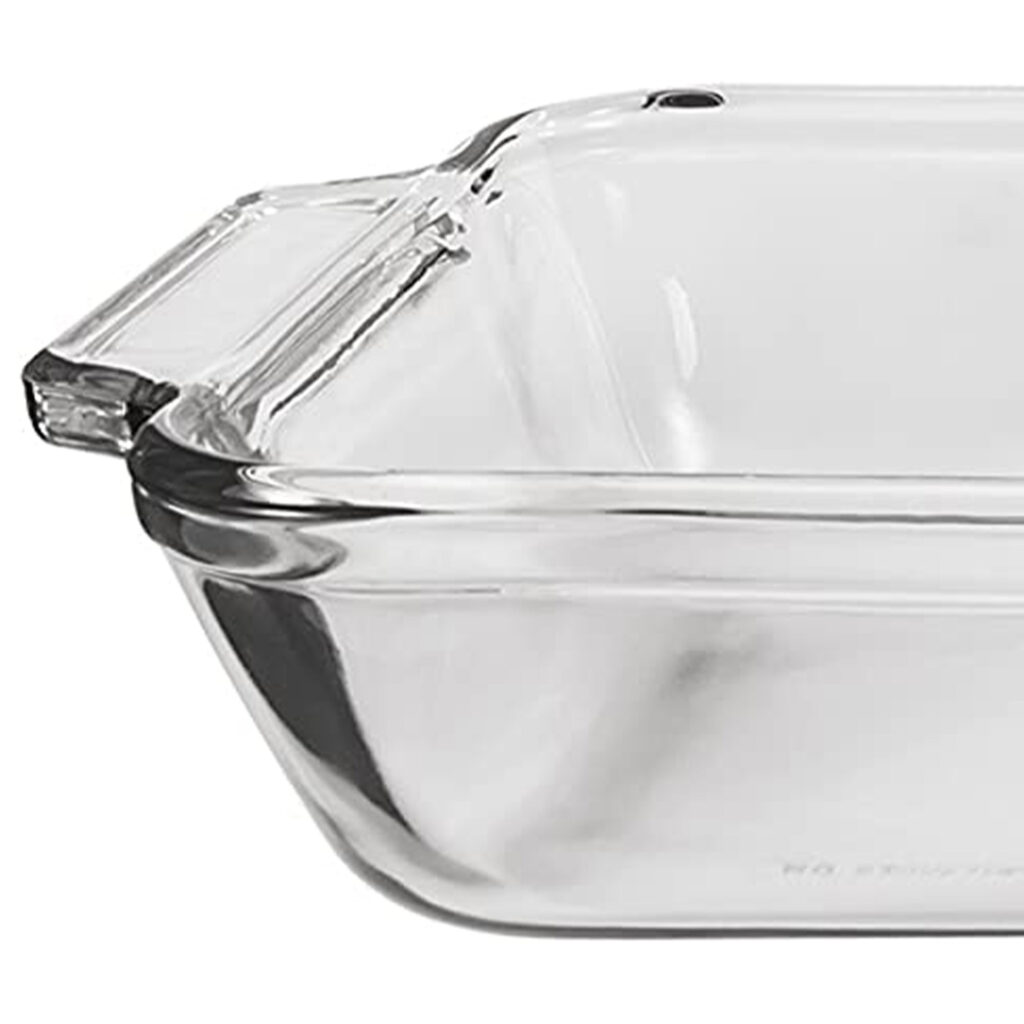
- Cook in a bain-marie. In a baking dish that has high sides, like a pyrex or a drip tray, put in the ramekins and fill the baking dish with boiling water until reaching 3/4 the height of the ramekins. Cook for 45 minutes.
- Remove from the oven then from the hot water and let cool down for 30 minutes. The mix will not be 100% set and it is normal. Refrigerate for 4 to 6 hours so that they get very cold. Ideally, leave them in the fridge overnight.
- When ready to serve, remove the crèmes brûlées from the fridge. Add 1 1/2 teaspoon (7.5 ml) of sugar on top of each and do a little round motion to spread the sugar evenly. Ideally, use a torch to obtain a fast crust! Then, let the crust harden for about 3-4 minutes. You can also use the broiler with the rack in the middle of the oven, but it will warm up your dessert… The crème brûlée should be eaten cold inside and warm on top!
***Cooking time may slightly vary depending on oven and ramekin size***
No, but it is the easy way. A small kitchen torch burns the sugar in seconds and leaves the custard cold. Without one, set your oven rack in the middle, turn on the broiler and stand there watching. Two to three minutes, no more.
Plain white sugar, fine grain. It melts evenly and turns amber fast. Coarse sugar leaves gritty spots that refuse to melt, and brown sugar burns before it caramelizes because of the molasses in it.
Either it came out of the oven too soon, or it did not spend enough time in the fridge. The custard is supposed to wobble when you pull the ramekins out. It firms up cold, not hot, so give it four to six hours before you judge it.
Two days for the custards, covered, in the fridge. The sugar crust is the only part that cannot wait. Torch it at the table.
Vanilla and cream, rich but not heavy, under a thin sheet of caramel that tastes slightly bitter because the sugar has started to burn. That bitter edge is the whole point. Without it you just have a sweet custard.
Ads
Ads
Ads
Ads
Ads